Why Your Dog Eats Too Fast — and Why It's Not Just Bad Manners
A dog that inhales its dinner isn't being greedy — it's running a survival reflex that no longer matches its life. The real problem isn't the mess or the noise. It's that gulping food is one of the most preventable triggers for a condition that can kill a dog in hours.
October 25, 2026 · 6 min read · 1052 words
Here's the thing nobody tells you at the pet store: when your dog inhales its dinner in forty-five seconds flat, the mess on the floor is the least of your problems. The word we reach for is "greedy" — as if the dog has a character flaw, as if it could slow down and just chooses not to. But a fast-eating dog isn't misbehaving. It's running a survival reflex that made perfect sense for most of its evolutionary history, and is now misfiring in a kitchen with a full bowl.
That misfire matters, because it has real stakes. Eating too fast isn't a quirk you laugh about. It's one of the most preventable triggers for a condition that can kill a dog in a matter of hours. So this isn't a lecture about manners. It's about closing the gap between what the behavior looks like and what it actually is — and what to do about it.
Why dogs eat fast (spoiler: it's not greed)
To a dog, food has never been guaranteed. Your dog's ancestors didn't know where the next meal was coming from, or whether a larger, stronger animal would take it before they finished. In that world, the correct speed to eat is as fast as physically possible. A slow eater left food on the table for someone else. A fast eater survived to pass on its genes. So the reflex to gulp is not a bug — it's one of the oldest, most deeply wired behaviors a dog has.
That's why it shows up even in puppies who've never missed a meal in their lives. They're not anxious, they're not starved, they're not badly trained. They're just running software that says "eat now, eat fast, don't look up."
There are also learned layers on top of the instinct. Dogs who've competed with littermates for a shared bowl often carry the habit into adulthood. So do dogs who've been fed on a strict, predictable schedule that turns every mealtime into a small event of anticipation. And some breeds are simply built for it — labs and beagles, in particular, seem to have the "eat everything immediately" dial turned up to eleven.
The takeaway is uncomfortable and freeing at the same time: you can't train the instinct out of a dog, and you don't need to. You manage the environment instead.
The real risk (and why "it's just how he eats" is a gamble)
The obvious costs of fast eating are noise, mess, and the occasional dramatic gag. Those are annoying but survivable. The risk worth taking seriously is called bloat — more precisely, gastric dilatation-volvulus, or GDV.
Here's what happens, simply. A dog that gulps food also gulps air. The stomach fills with a mix of food, air, and fluid until it swells like a balloon. In the worst cases, that distended stomach then twists on its axis, sealing off both ends. Blood can't flow. Gas can't escape. Without emergency surgery — and often within hours — it's fatal.
Fast eating isn't the only trigger, but it's a big one, and it's one of the few you can directly control. The dogs at highest risk are the deep-chested, large breeds: Great Danes, German Shepherds, Standard Poodles, Boxers, Weimaraners, Dobermans, and most of the big barrel-chested mixes. If you live with one of these, the question isn't "is my dog a messy eater" — it's "how do I slow this down today."
There are quieter risks too, and they add up. Gulping causes regurgitation — the food comes back up undigested minutes later, which is uncomfortable, messy, and can lead to your dog re-swallowing it. Scarfing large pieces raises the risk of choking. And dogs who eat too fast routinely overshoot, because the "I'm full" signal lags several minutes behind an empty bowl — which quietly feeds obesity over a lifetime.
What actually slows a dog down
Here's the honest part. A lot of the folk advice doesn't work well. Feeding your dog "in a quiet room alone" helps a little with anxiety-driven gulping, but does almost nothing for a dog whose instinct is simply fast. A tennis ball dropped in the bowl slows some dogs and frustrates others into tipping the whole thing over. What works reliably, and immediately, is changing the geometry of the meal.
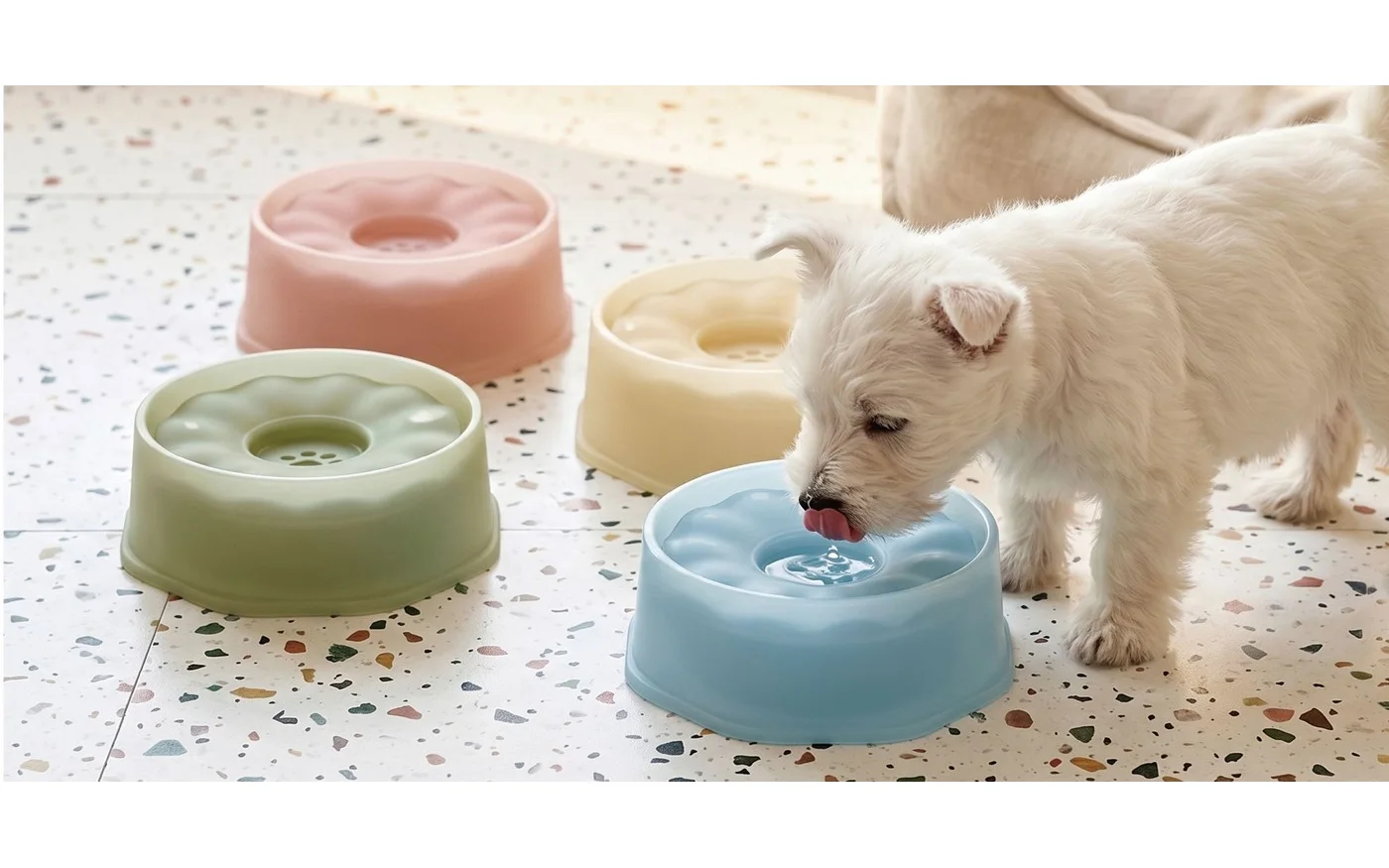
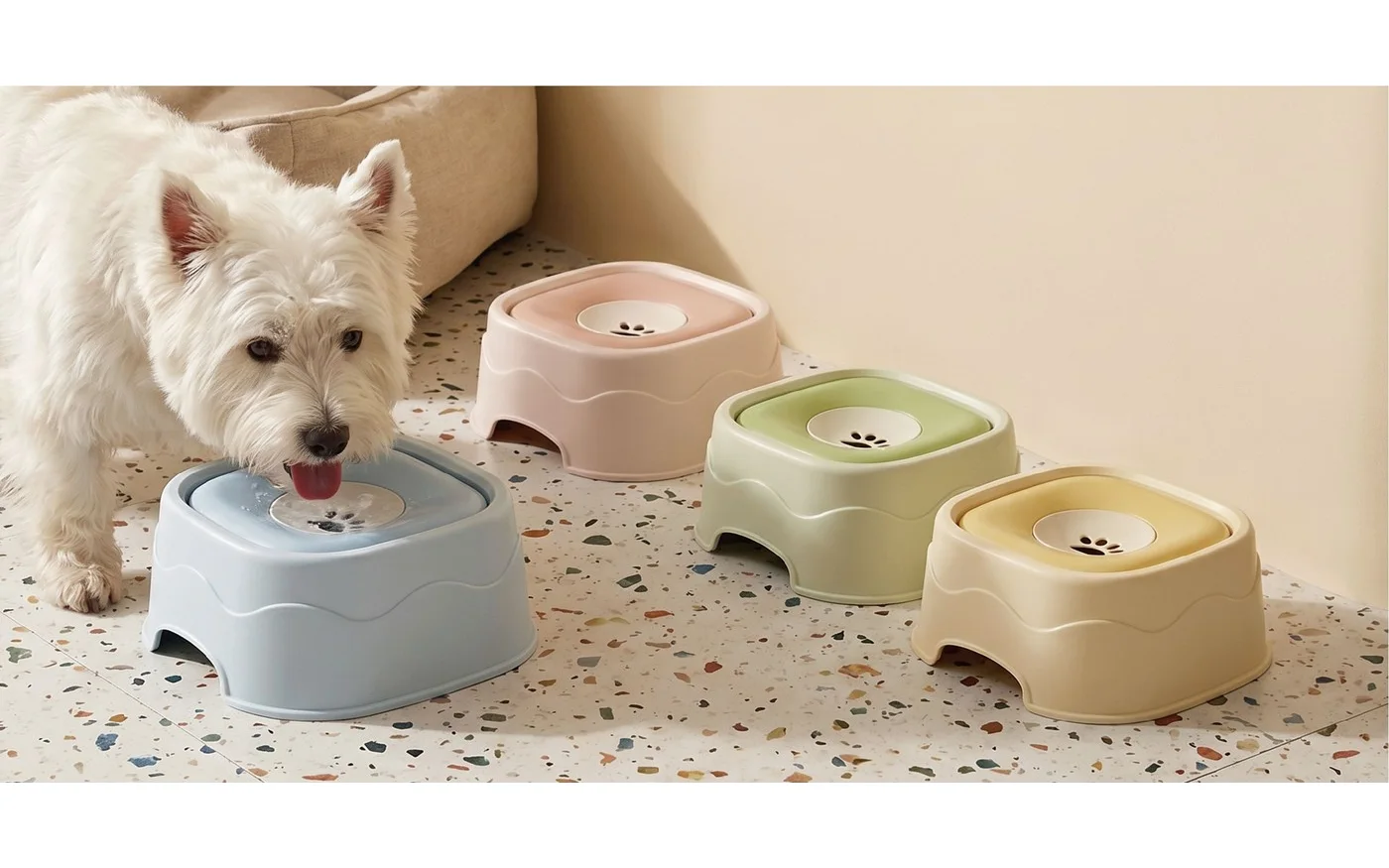
A [slow feeder bowl](/products/slow-feed-bowl-raised-centre) works by putting obstacles — ridges, a raised centre, a maze pattern — between your dog's mouth and the food. The dog physically cannot take a full mouthful. Each bite has to be worked around a barrier, which stretches a forty-second meal into several minutes. There's no training involved, no willpower required from you or the dog. The bowl does the work.
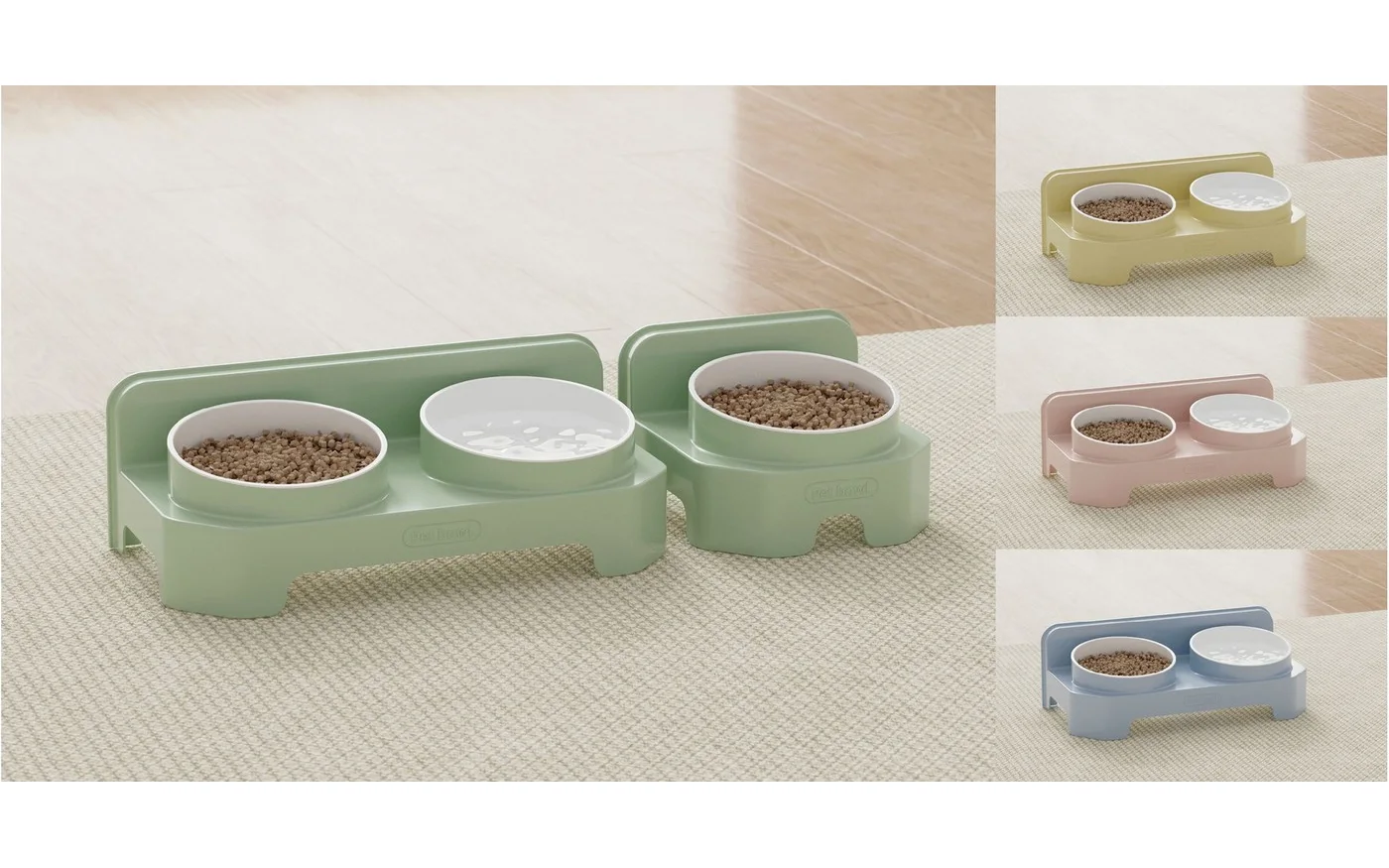
If your dog is a determined eater, a [trio slow feed bowl](/products/trio-slow-feed-bowl) — three separate compartments — breaks the meal into smaller puzzles, while a [fold-flat slow feeder](/products/fold-flat-slow-feeder) adds a portable, easy-to-clean option you can pack for travel or the car. For dogs who need more than just slower eating, a [lick mat bowl](/products/lick-mat-bowl) turns part of the meal into a licking activity, which has the added benefit of being genuinely calming for anxious dogs.
A few practical notes from dogs who've put these to the test. Start with a shallow, simple pattern if your dog has a short muzzle — bulldogs and pugs can get frustrated by deep mazes. Watch the first few meals: a dog that's truly working hard and getting a little tired is exactly what you want. And if your dog starts tipping the bowl, put it on a non-slip mat or in a corner. The goal isn't to frustrate your dog — it's to make fast eating impossible without making eating hard.
The bottom line
Your dog isn't greedy, and it isn't ungrateful. It's just eating the way dogs have always eaten — and that ancient speed is now more dangerous than it is useful. The good news is that this is one of the rare dog problems with a clean, cheap, immediate fix that doesn't ask anything of your dog's personality or your patience. Slow the bowl down, and you slow the risk down with it. A few extra minutes at dinner is a small price for not having to learn the word "bloat" the hard way.
Referenced in this guide
Keep reading