Your cat stopped using the litter box. Work through this list in order.
Nine times out of ten it is the box, not the cat. Start with a vet visit to rule out the medical causes, then work through location, size, litter depth, hood and cleaning schedule in that order.
October 15, 2026 · 7 min read · 663 words
Go to the vet first. Not second, not after you have tried changing the litter.
Urination outside the box is the single most common symptom of a urinary tract problem, and a cat with a UTI is not being spiteful — it is associating pain with the box. Sterile cystitis, crystals and blockages all present this way. A blockage in a male cat is an emergency within hours.
Once the medical causes are ruled out, work through the rest in this order. Do not change three things at once, because then you will not know which one worked.
1. Count the boxes
One per cat, plus one, in separate locations. Two cats sharing one box is the most common setup problem there is, and it does not present as a fight — the subordinate cat just goes somewhere else.
"Separate locations" matters. Two boxes side by side in the same corner count as one box, because a cat that blocks access to a corner blocks both.
2. Move the box
If the box is in a basement, a laundry room behind a closed door, or next to anything that starts without warning — a boiler, a washing machine, a sump pump — move it. A cat that has been startled once while using a box will avoid it for months.
Put it somewhere with two ways out. A corner with one exit feels like a trap, and if there is another animal in the house, it may be one.
3. Check the size
Nose to tail base, times 1.5, and that is the length of floor the box needs. Most boxes are too short, and the symptom is a cat that goes in, digs, and puts its rear over the edge. If the cat is large and the box is not, this is usually the whole problem.
4. Check the depth
Five to seven centimetres of litter. Below five, a cat digs to the base, and scraping plastic is both loud and unpleasant. Some cats will dig to the base and then refuse the box entirely.
5. Take the hood off
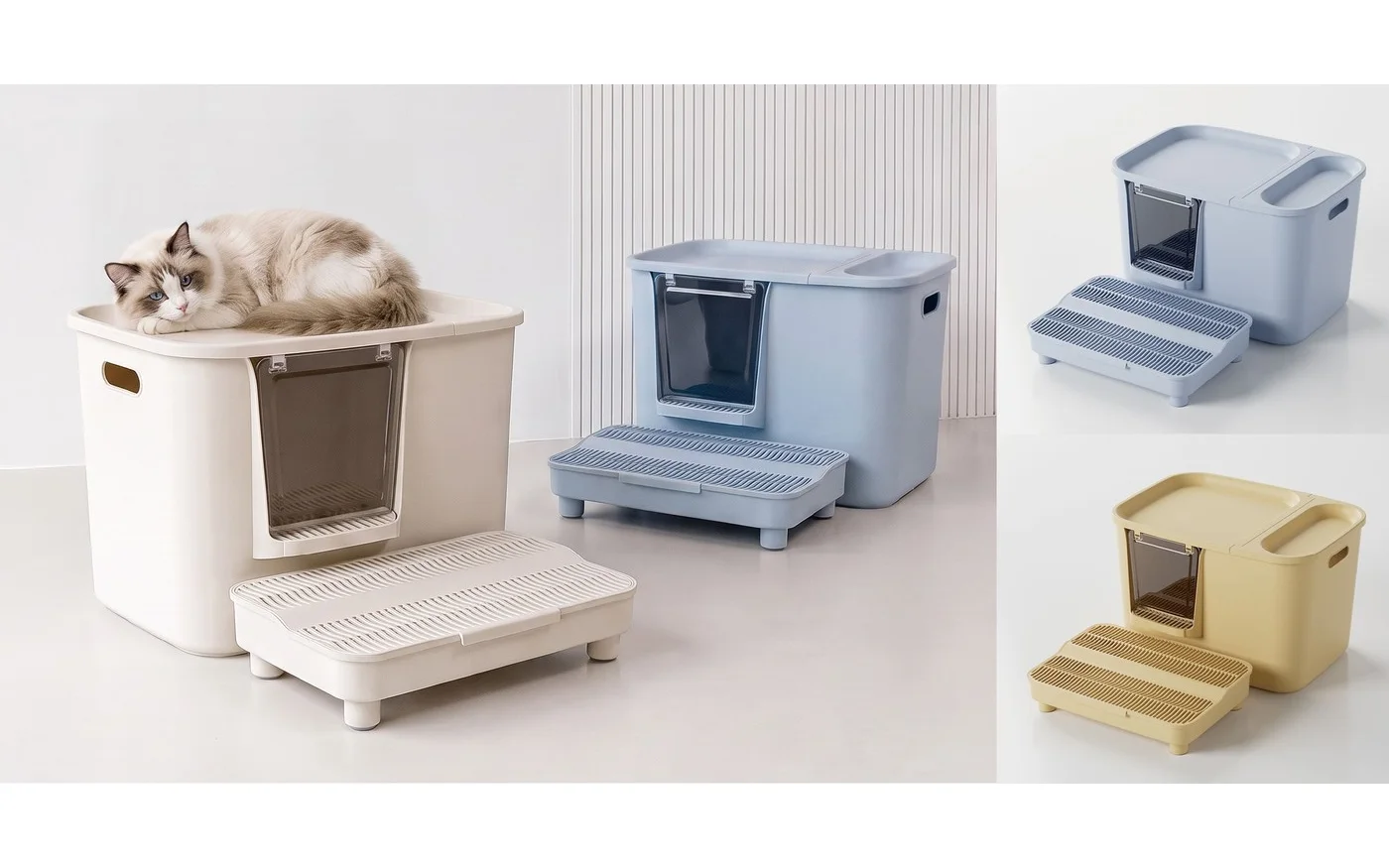
Try it for a week. Hoods contain kicked litter and hide the contents, and plenty of cats do not care — but a hood also concentrates ammonia smell inside the box, and a cat has a far better nose than you do. If removing the hood fixes it, the hood was the problem, whatever it was doing for your floor.
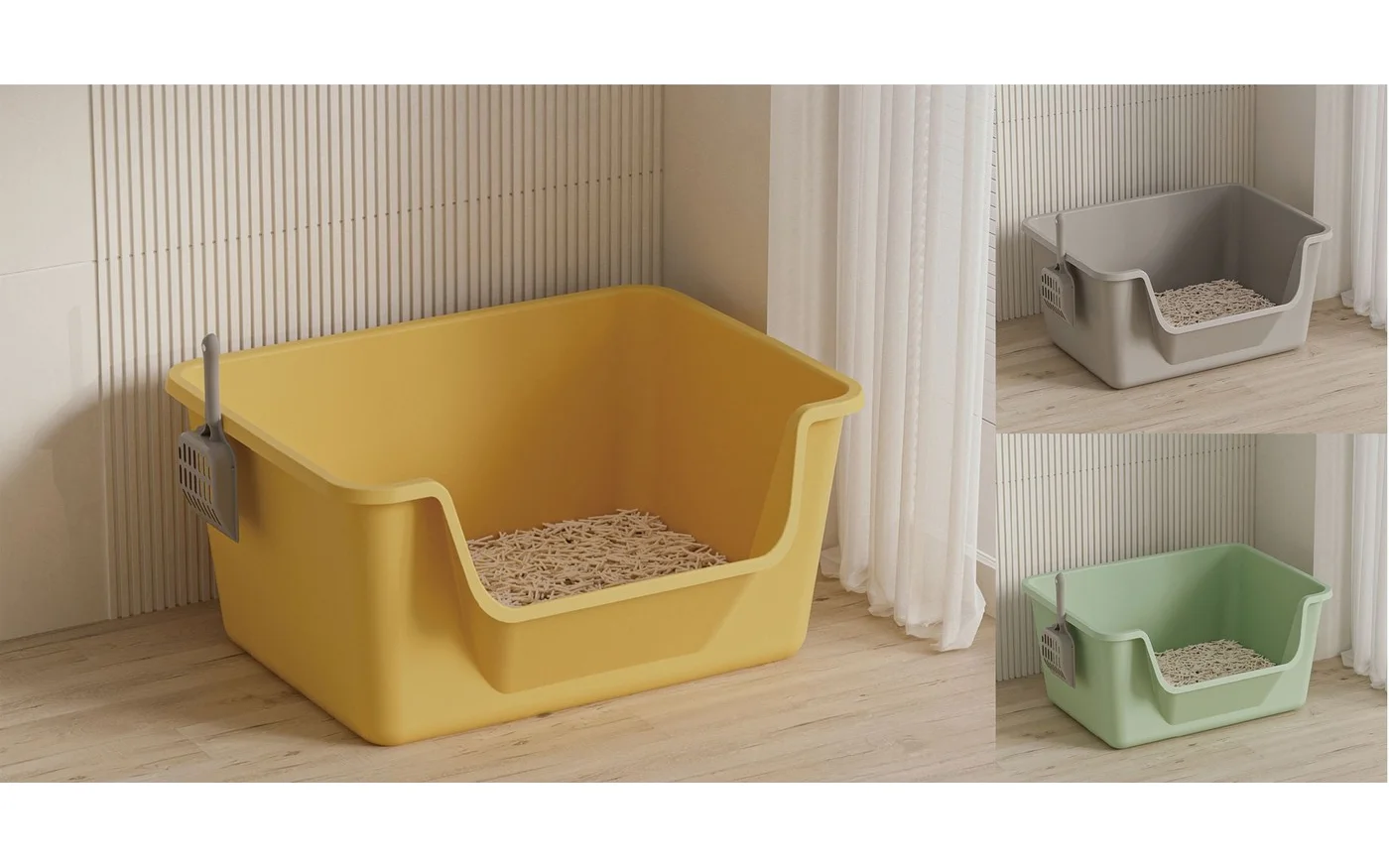
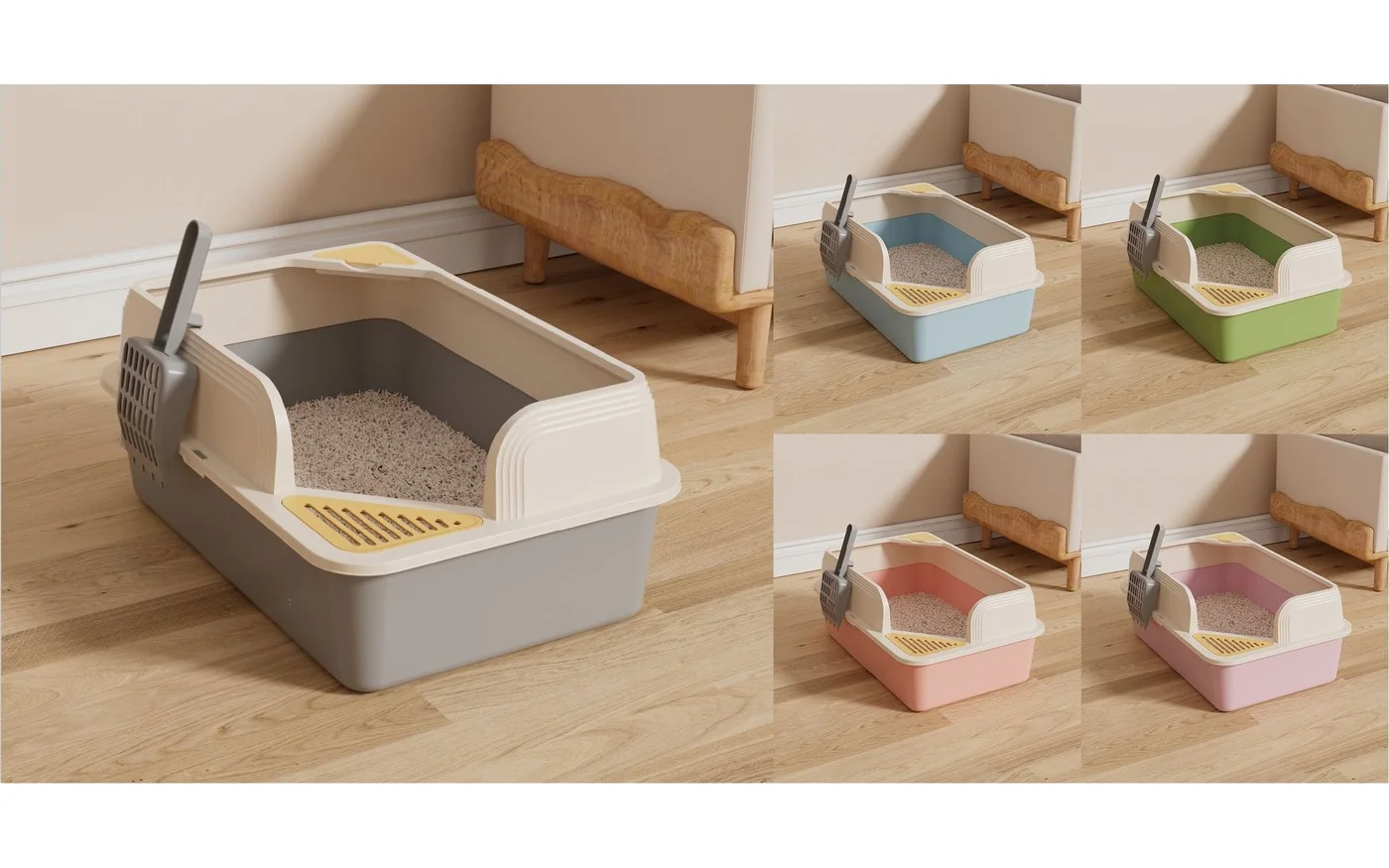
Also check the entry lip. A 20 cm wall is fine for an adult cat and a real obstacle for a kitten, an older cat, or one with arthritis. The low-entry boxes in this catalogue sit around 15 cm and exist for exactly this reason.
6. Change the cleaning schedule, not the soap
Scoop daily and wash weekly. The thing that goes wrong is usually frequency, not product — and the instinctive fix, a stronger cleaner, makes it worse. Bleach and anything heavily scented are both common causes of a cat refusing an otherwise clean box. Warm water, mild unscented soap, rinse thoroughly.
If the pan itself smells an hour after washing, the plastic is done. See the materials guide.
7. Do not punish
It does not work, and it makes the problem worse. Punishment teaches a cat that eliminating near you is dangerous, which is how you get a cat that goes behind the sofa instead of on the tile where you can clean it.
Clean the spot with an enzymatic cleaner — not ammonia-based, which smells like urine to a cat and actively marks the spot as a toilet.
What self-cleaning boxes change
They remove the frequency problem entirely, because the box is clean every time. They introduce a different one: some cats will not use a box that moves and makes noise. Give it a week with the old box still available alongside it, and most cats switch on their own.
Referenced in this guide
Keep reading