Stainless steel vs plastic litter boxes: what actually changes
Plastic is lighter and cheaper and does the job for years. Steel costs more for one reason: it never absorbs odour. Here is where each one wins, and when a pan is simply past saving.
October 18, 2026 · 5 min read · 506 words
Buy plastic unless you have a reason not to. Buy steel when odour has become a recurring problem, or when you are replacing a second plastic pan in three years.
That is the honest version. The rest of this is why.
What plastic does well
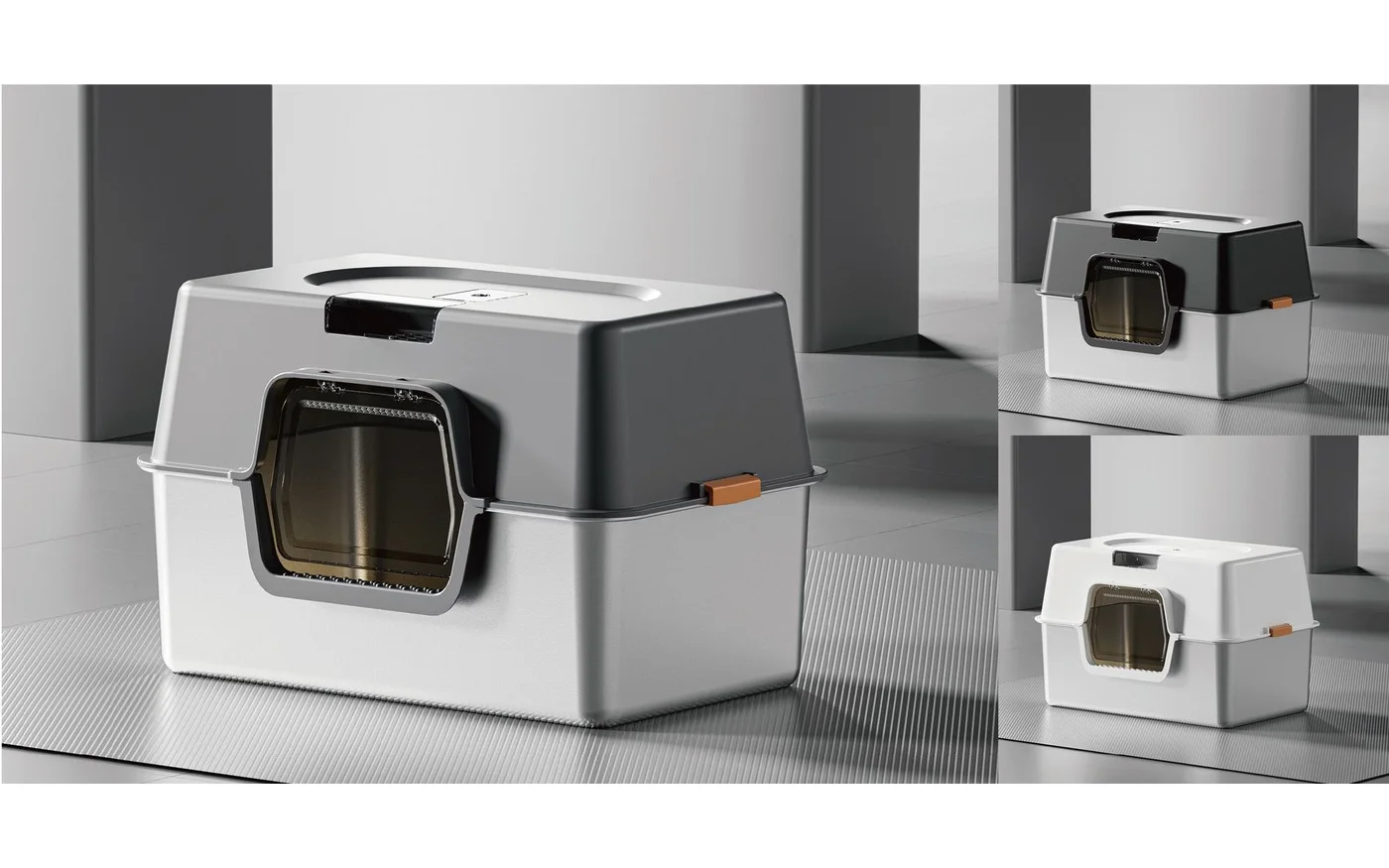
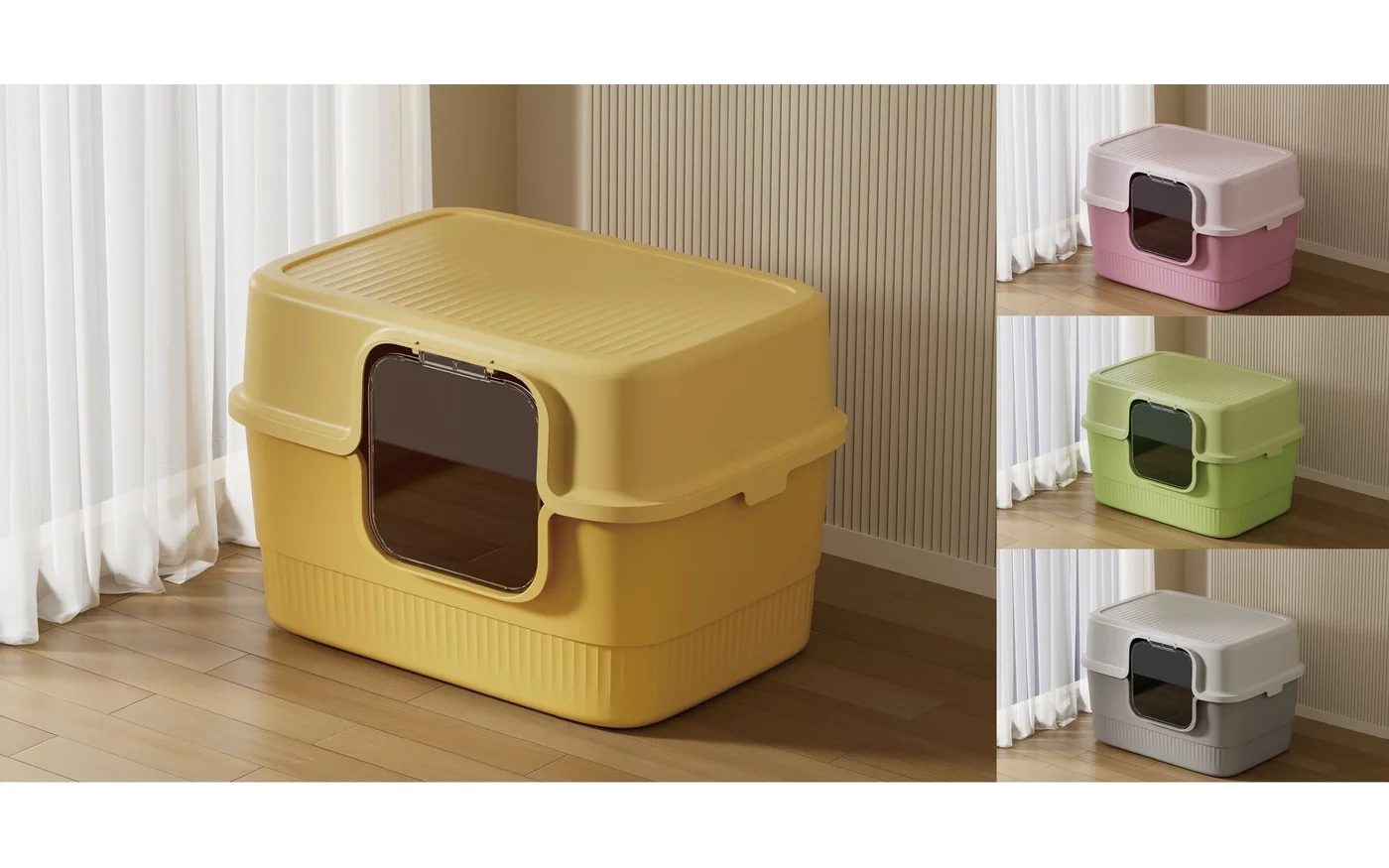
PP (polypropylene) is light, quiet, warm to the touch, and cheap enough that a pan is not a considered purchase. It takes a moulded shape well, so it is what the foldable, hooded and corner designs in this catalogue are made from. ABS is stiffer and holds a glossier finish, which is why it shows up on lids and hoods that need to keep their shape.
Neither material fails suddenly. A plastic pan lasts years and then starts holding smell, and there is no repair — only replacement.
Why plastic eventually smells
Plastic is slightly porous, and more importantly it scratches. Every scratch is a place that urine sits in and dish soap does not quite reach. After a year or two of daily use, the base of a plastic pan has enough micro-scratches that it smells again within an hour of washing.
Two things speed this up: abrasive pads, and bleach. Both are the instinctive response to a pan that smells, and both make it worse. Scouring a plastic base is the fastest way to turn a two-year pan into a six-month one.
What steel changes
Steel does not absorb anything. A pan that has been in service five years washes clean and stays clean, because there is nowhere for odour to sit. It is also the only material that survives a genuinely hot wash, and it does not scratch in a way that matters — a scuff on steel is cosmetic and will not rust.
What you give up: weight, noise, and price. Steel pans are heavier to carry to the sink, a metal scoop against a metal base is louder than most cats like, and they cost two to three times a comparable plastic pan. Steel also conducts, so in an unheated room the pan is cold — some cats object to that in winter.
The hybrid option
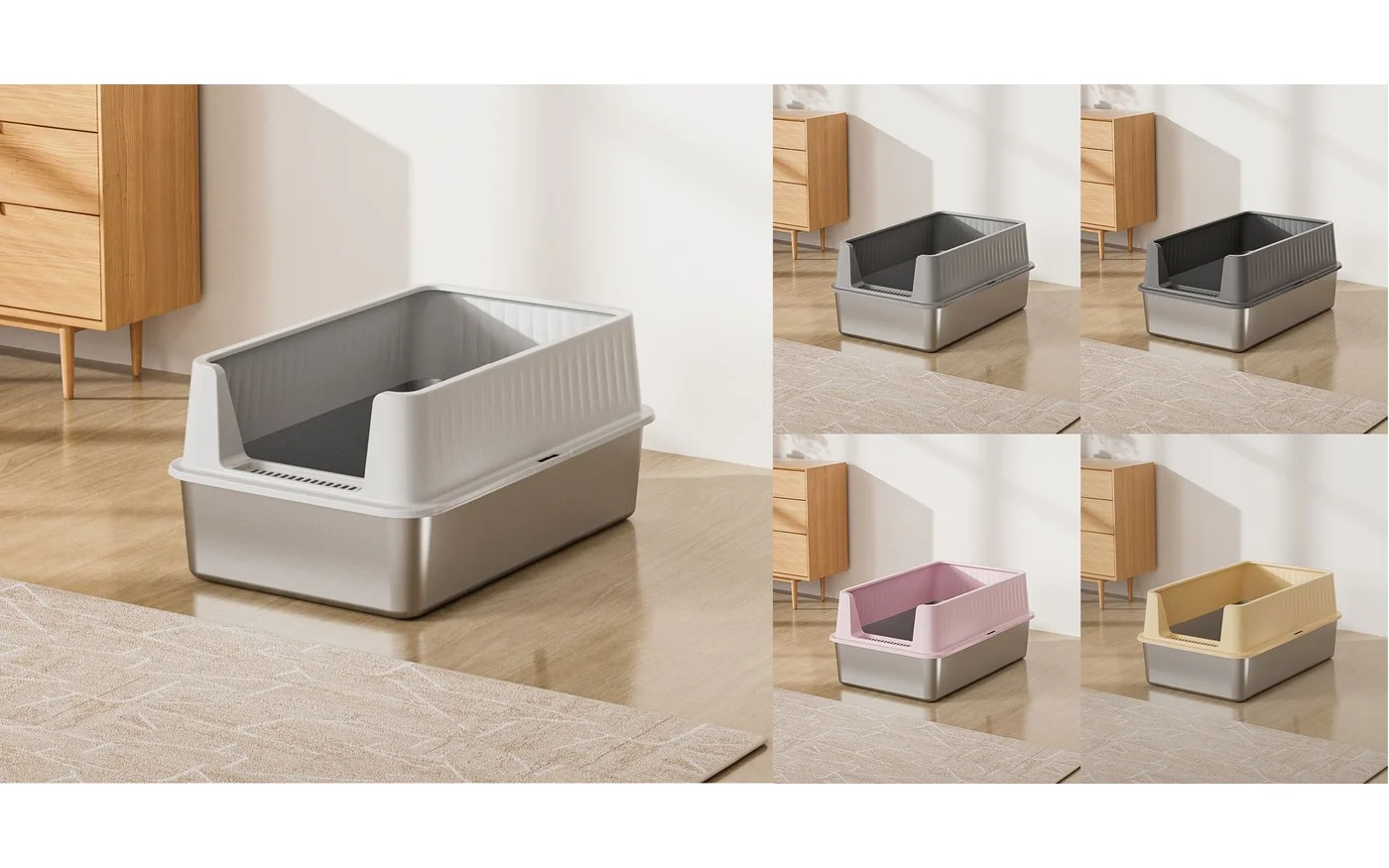
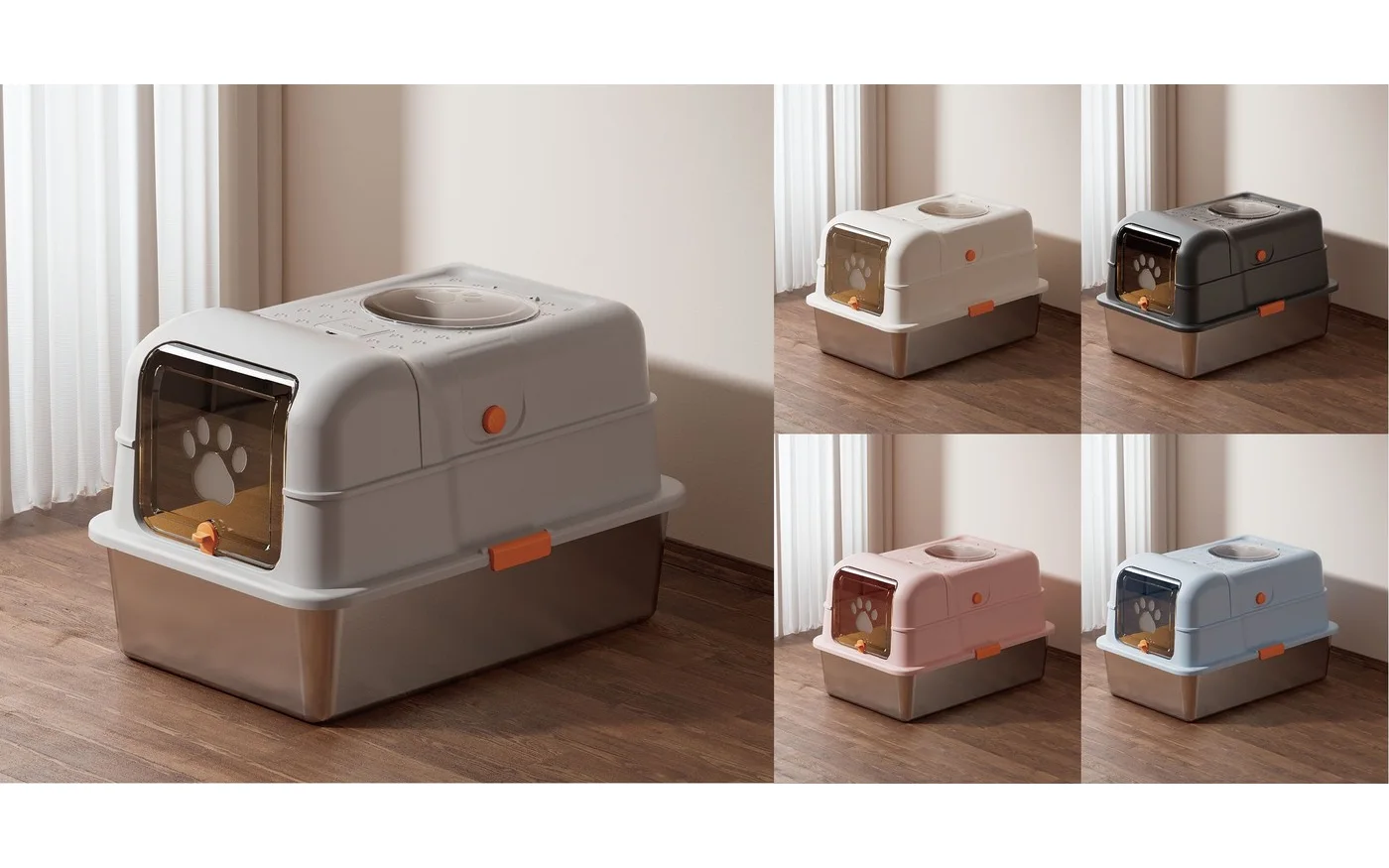
Several boxes here pair a plastic frame with a steel base pan. You get the shaped hood, the low entry lip and the light weight, with the one surface that actually matters made of steel. If you want a hooded box and you have had smell problems before, this is the one to look at.
When to replace rather than clean
Roughly 12–18 months for a plastic pan in daily single-cat use; sooner with two cats. The test is simple: wash it properly, let it dry completely, and smell it an hour later. If it still smells, the material is done and no product will fix it.
Washing a steel pan is the opposite problem — it will outlast the cat. Replace it when the rim has deformed enough that it no longer sits flat, because a rocking pan is genuinely unpleasant to step into.
Referenced in this guide
Keep reading