How big should a litter box be?
Most boxes sold as "large" are shorter than the cat using them. Here is the one measurement that matters, why hooded boxes shrink usable space, and what to do when the box has to fit a specific gap.
October 20, 2026 · 6 min read · 530 words
Take a box at least 1.5 times the length of your cat, measured from the nose to the base of the tail — not including the tail itself.
That is the whole rule. A 50 cm cat needs a 75 cm run at the floor of the box. Nearly everything marketed as "large" in a pet shop is 50–55 cm, which is why litter ends up on the floor beside them rather than in them.
Why the length matters more than the volume
A cat does not crouch in the middle. It walks in, turns around, digs at one end, and squats at the other. That sequence needs horizontal run, and no amount of depth substitutes for it. A deep box that is too short forces the turn, and a cat forced to turn will put its rear end over the edge.
If you are choosing between two sizes and both fit the space, take the larger. The failure mode of a too-big box is that it takes up floor space. The failure mode of a too-small box is that you find out at 6am.
Read the outside number, then subtract
Every dimension on this site is the outside of the box, taken at the widest point including the rim. Interior floor space runs about 1.5–2 cm less on each side — 3–4 cm off the length and the width.
So a box listed at 58 × 37 cm gives you roughly 54 × 33 cm of usable floor. Measure your gap, then compare against the figure on the product page. Do not compare against a small/medium/large label, because those mean nothing across brands.
Hooded boxes are smaller than their footprint
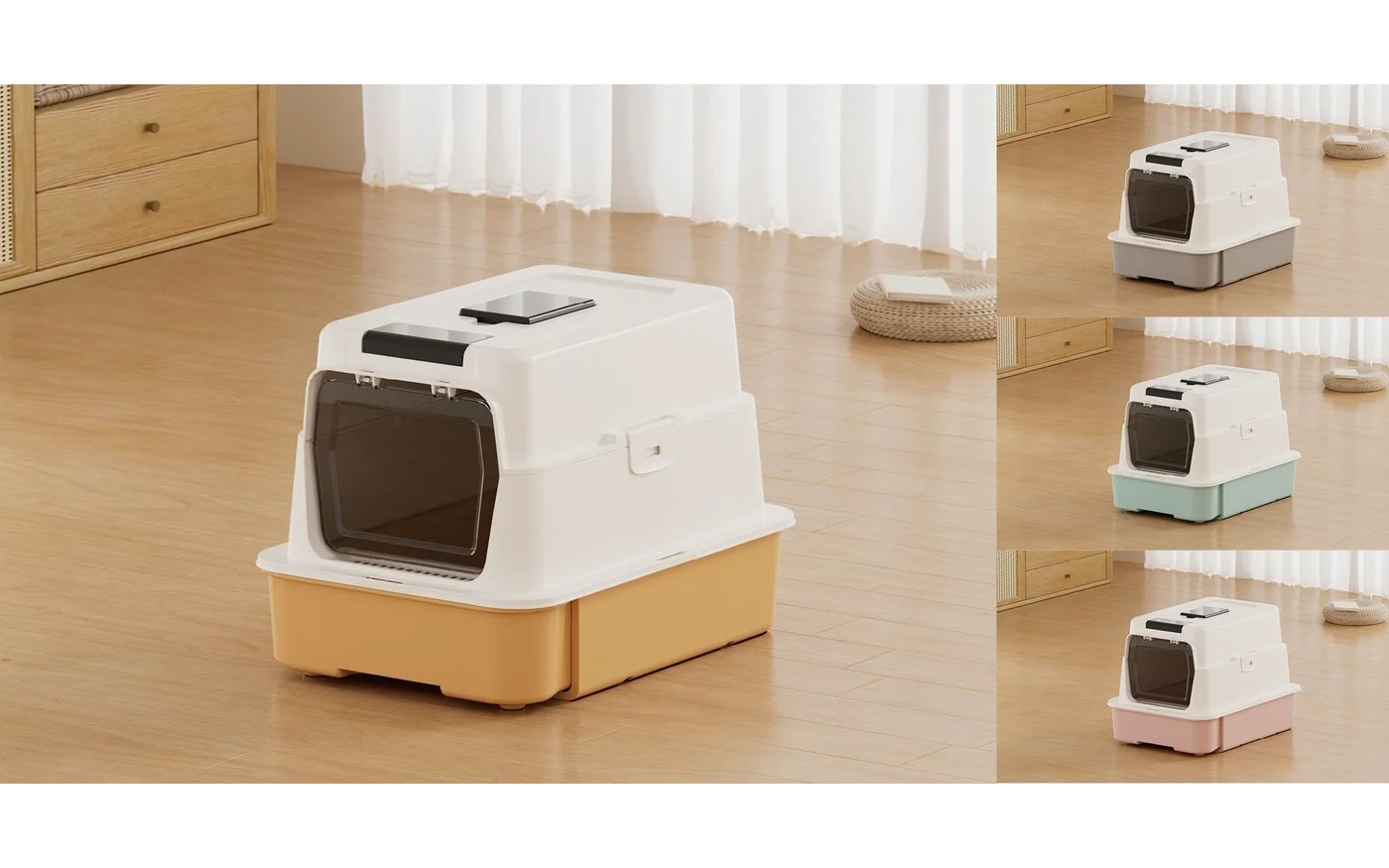
A hood eats space in two ways. The entry lip takes 4–6 cm off the front, and the sloped back means the tallest part of the box is where the cat is not. A hooded box listed at 50 × 40 cm usually gives less usable floor than an open box listed at 50 × 38 cm.
That is not an argument against hoods. They contain kicked litter and they hide the contents, which plenty of people want. It is an argument for buying a hooded box one size up from what you would buy open.
Kittens and low entry
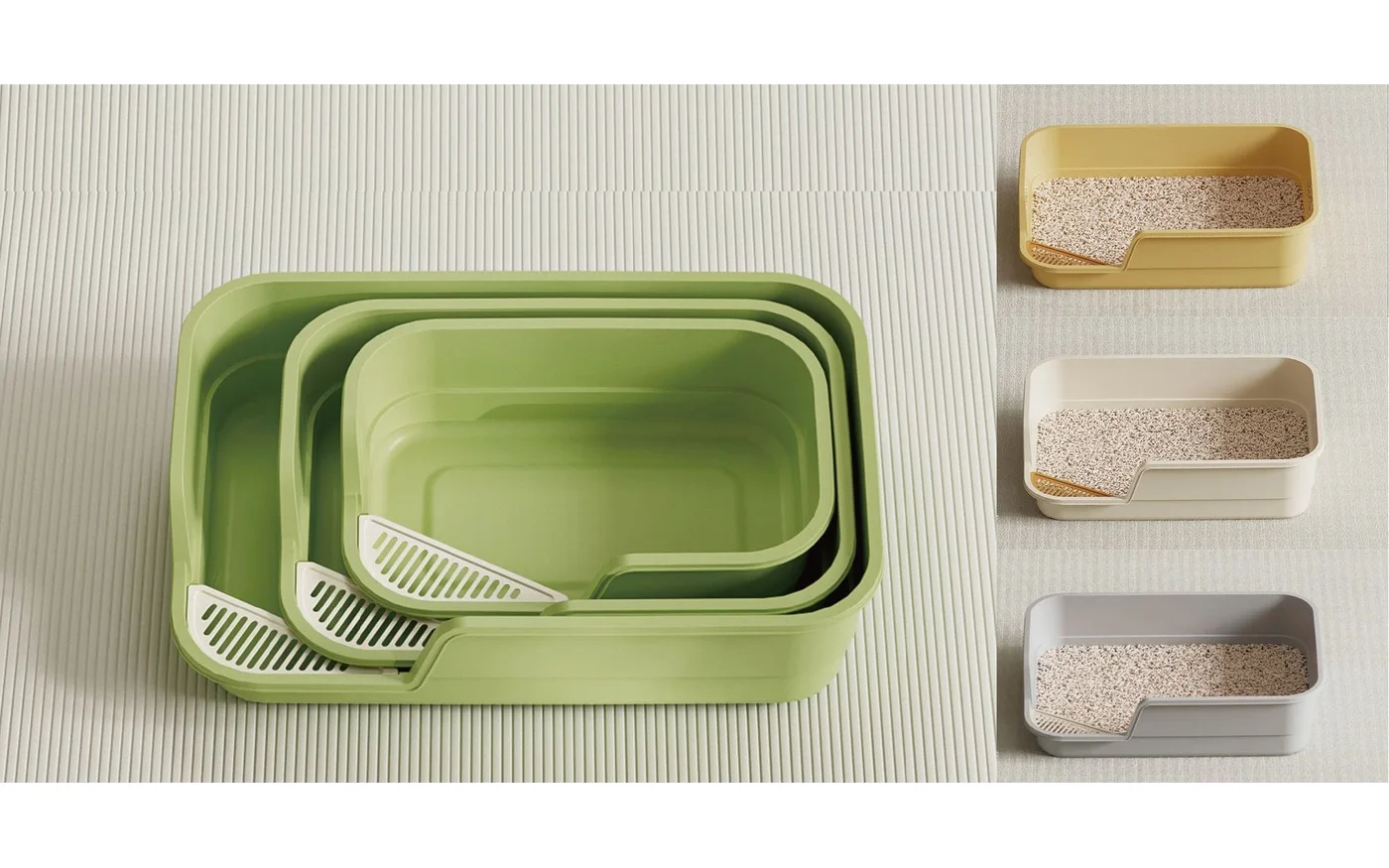
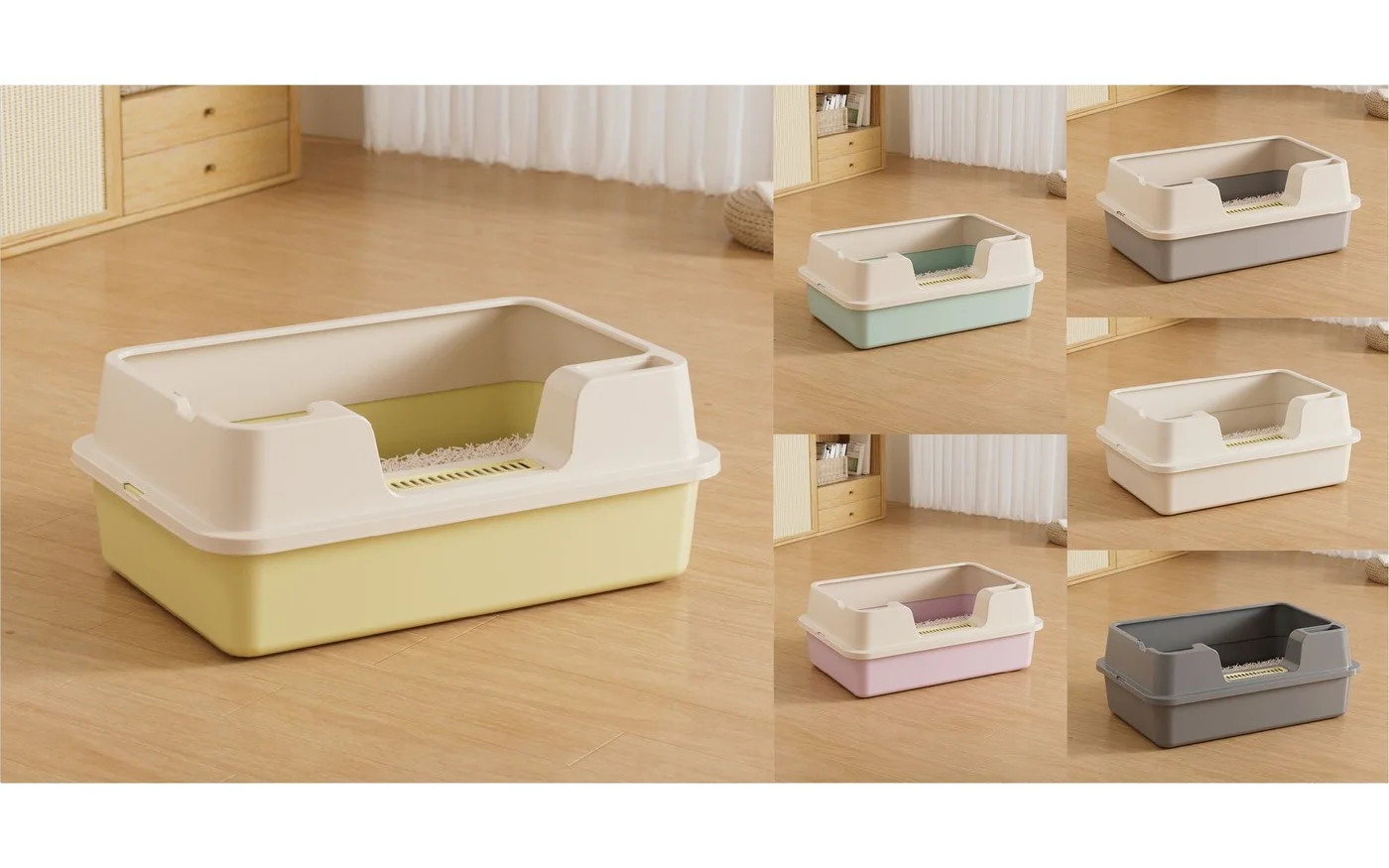
A kitten cannot clear a 20 cm wall. The low-sided boxes in this catalogue sit around 15 cm, which a kitten can step over and an adult cat still finds comfortable. There is a trade: a low wall means more litter gets kicked out. Most people start low and move up at about six months.
Three checks before you order
- Measure the cat nose to tail base, multiply by 1.5, and compare that against the interior length.
- Measure the floor gap you have, including the swing of a door or the overhang of a cabinet.
- If the box has to sit against a wall, remember the hood needs clearance to open.
If the numbers do not work in one dimension, look at the corner boxes — they trade width for depth, which suits an alcove or the end of a hallway.
Referenced in this guide
Keep reading