Stainless Steel vs Ceramic vs Plastic Pet Bowls: The Cleanest-Looking One Is Often the Dirtiest
The prettiest pet bowl on the shelf is usually the one doing the most invisible harm. A plastic bowl looks fine after a wipe, but it's quietly turning into a bacteria farm in scratches you can't see. Here's the honest breakdown of which material actually keeps your pet healthy — and why the bowl matters far less than what you do with it.
October 26, 2026 · 6 min read · 1154 words
Walk down the pet aisle and the bowls practically market themselves to you, not your pet. The ceramic one with the hand-painted flowers. The pastel plastic one that matches your kitchen. The elevated stand that looks like a piece of furniture. All of them are sold on how they'll look in your home. And that's exactly the problem — because the bowl that looks cleanest on your shelf is very often the one doing the most invisible harm to the animal eating out of it.
Here's the honest truth most pet owners learn the hard way: your pet doesn't care what the bowl looks like. Your pet cares about a material that doesn't trap bacteria, doesn't leach chemicals, and doesn't break into a thousand sharp pieces when a happy tail sends it flying. So this isn't a style guide. It's about the one variable that actually matters — the material — and why the conventional wisdom around it is half right and half dangerous.
Why "it looks clean" is a trap
The real difference between bowl materials isn't visible. It's microscopic, and it's where the actual risk lives.
Plastic is the worst offender, and it fails in a way you can't see with the naked eye. Every time you scrub a plastic bowl — and every time a dog's teeth scrape the bottom chasing the last kibble — you carve tiny scratches into the surface. Those scratches are too shallow to notice, but deep enough to shelter bacteria. No matter how hard you wash, a colony survives in the grooves and repopulates the bowl within hours. Plastic is also the only common bowl material that leaches: it can shed BPA and other chemical additives, especially when hot food or water hits it, or when it goes through a dishwasher cycle it was never built to survive.
There's a concrete, everyday version of this you've probably seen without naming it: cat chin acne. When a cat develops black crusty bumps under its chin, the culprit is very often a plastic food bowl — the porous surface holds bacteria that rubs against the chin at every meal, and the acne clears up almost immediately once the owner switches to stainless steel or ceramic. It's one of the cleanest "diagnoses" in all of pet care, and almost nobody tells you about it in the store.
Ceramic looks like the hygienic, premium choice, and sometimes it is. But ceramic has its own invisible problem: the glaze. Cheap or imported ceramic bowls can carry lead or cadmium in the glaze — the very coating that makes the bowl pretty — and those heavy metals can leach into food and water over time. And once a ceramic bowl chips or cracks, that exposed, unglazed edge becomes exactly the same bacteria reservoir as a scratched plastic bowl, only sharper.
The material you should actually pick
If you want the honest answer with no caveats, it's stainless steel. Vets recommend it for a reason that has nothing to do with style: it's non-porous. There are no pores for bacteria to grip, no scratches that hold a colony, no glaze that can leach lead. It survives the dishwasher at high heat, it won't rust or chip, and it doesn't absorb or release anything into your pet's food. For a dog or cat that drinks water, eats two meals a day, and occasionally knocks the whole thing over, stainless is the boring, unglamorous, correct answer.
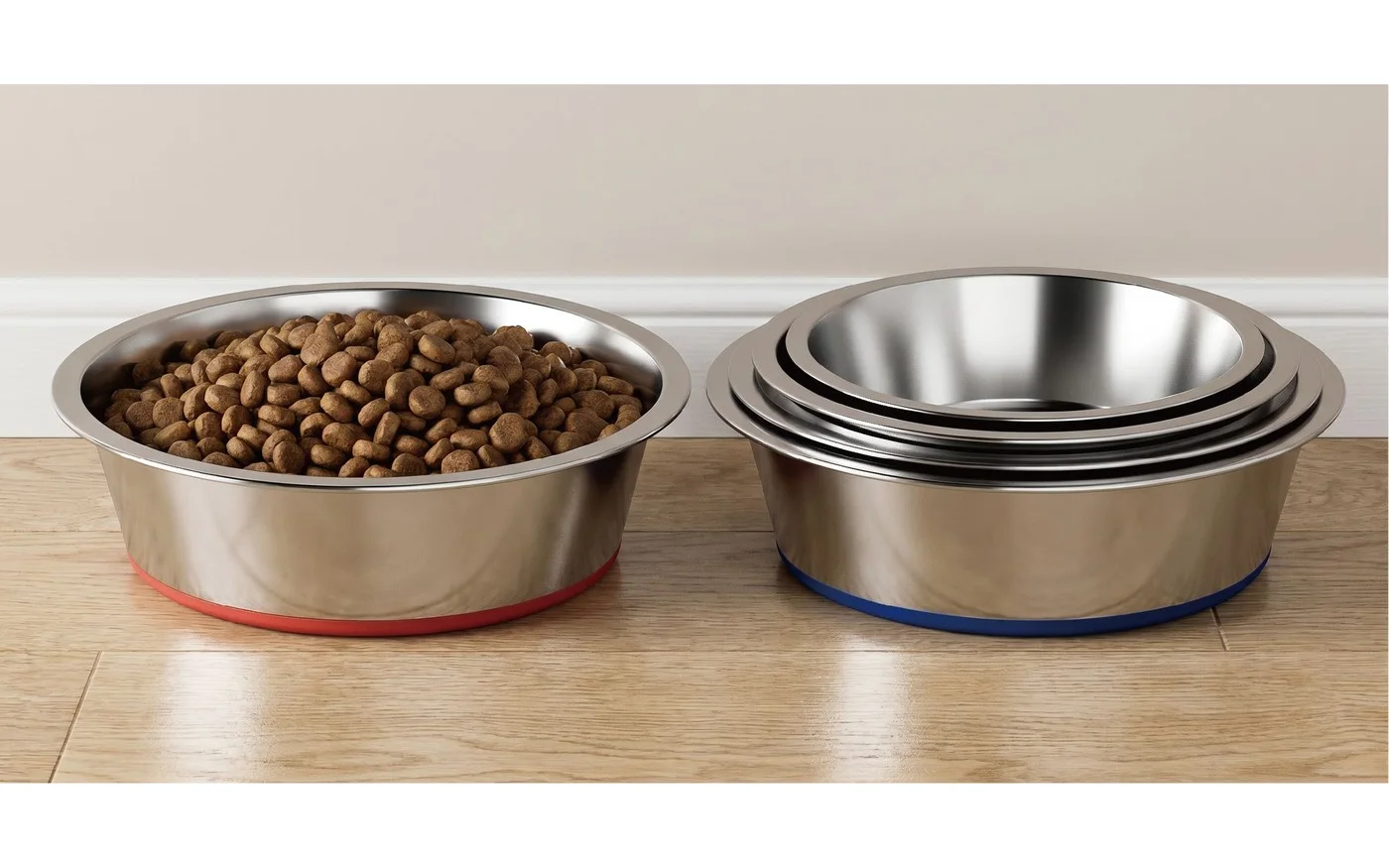
Two honest caveats, because nothing is free. First, not all stainless is food-grade. You want the 18/8 or 304 grade — the stuff used in human cookware. A cheap no-name bowl can be a lower grade that's more prone to pitting and rust, especially with wet food left sitting in it. Second, stainless is light and slick, which means it slides across a tile floor while a determined dog eats. The fix is simple: get one with a non-slip silicone base, or set it on a mat. A [stainless steel bowl](/products/stainless-steel-bowl-26-26-7-5-cm) with a stable base solves both the hygiene problem and the sliding problem in one go.
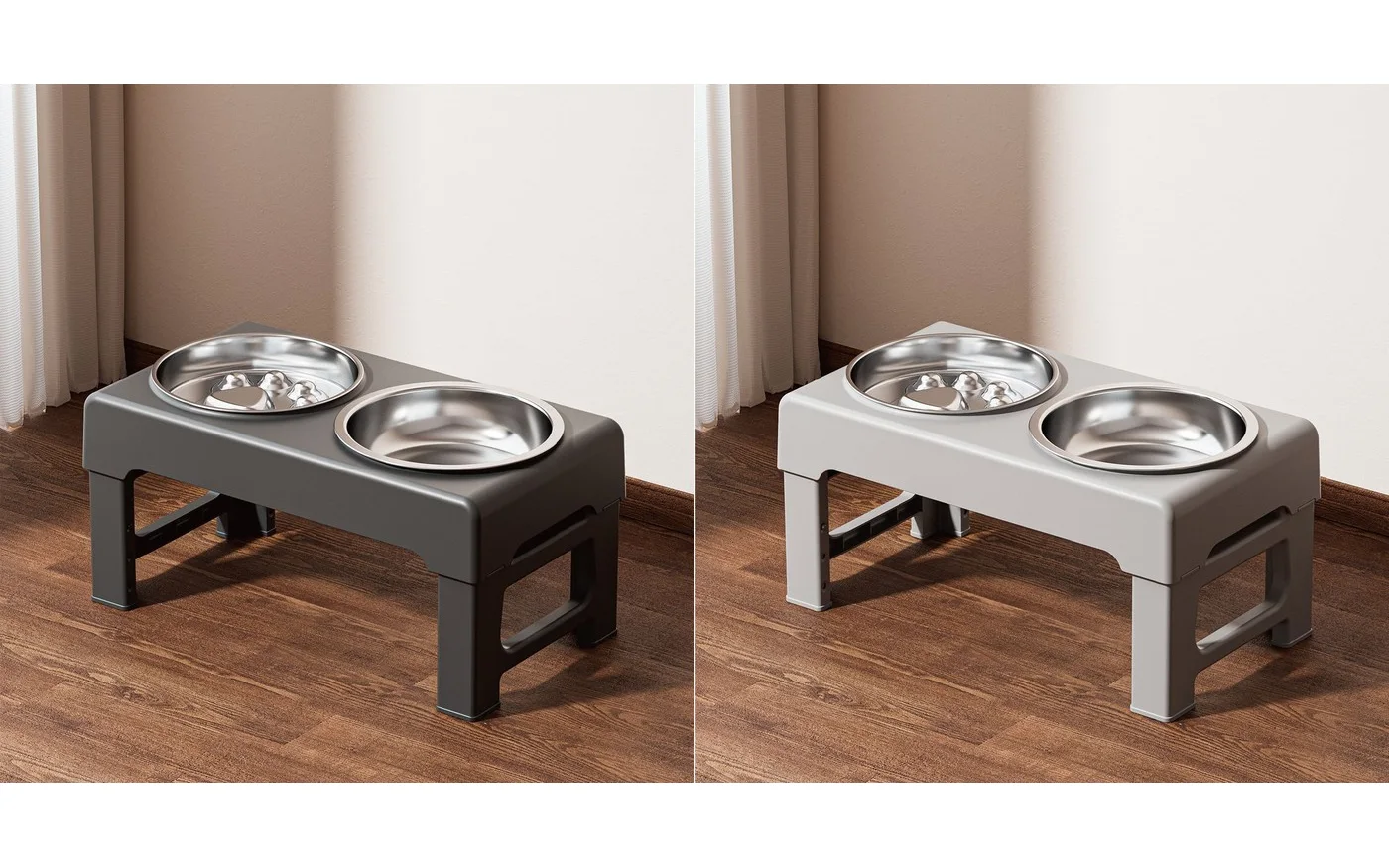
If your pet is a larger breed or an older animal with joint stiffness, an [elevated bowl](/products/elevated-pet-bowl-1-2-l-3-2-l) — stainless inserts on a raised stand — spares the neck and shoulders while keeping the same non-porous surface. The elevation isn't a hygiene feature, but the material of the insert is, so make sure it's stainless rather than plastic.
What ceramic and plastic are actually good for
Let me be fair, because "never use anything but steel" is too rigid and not quite honest.
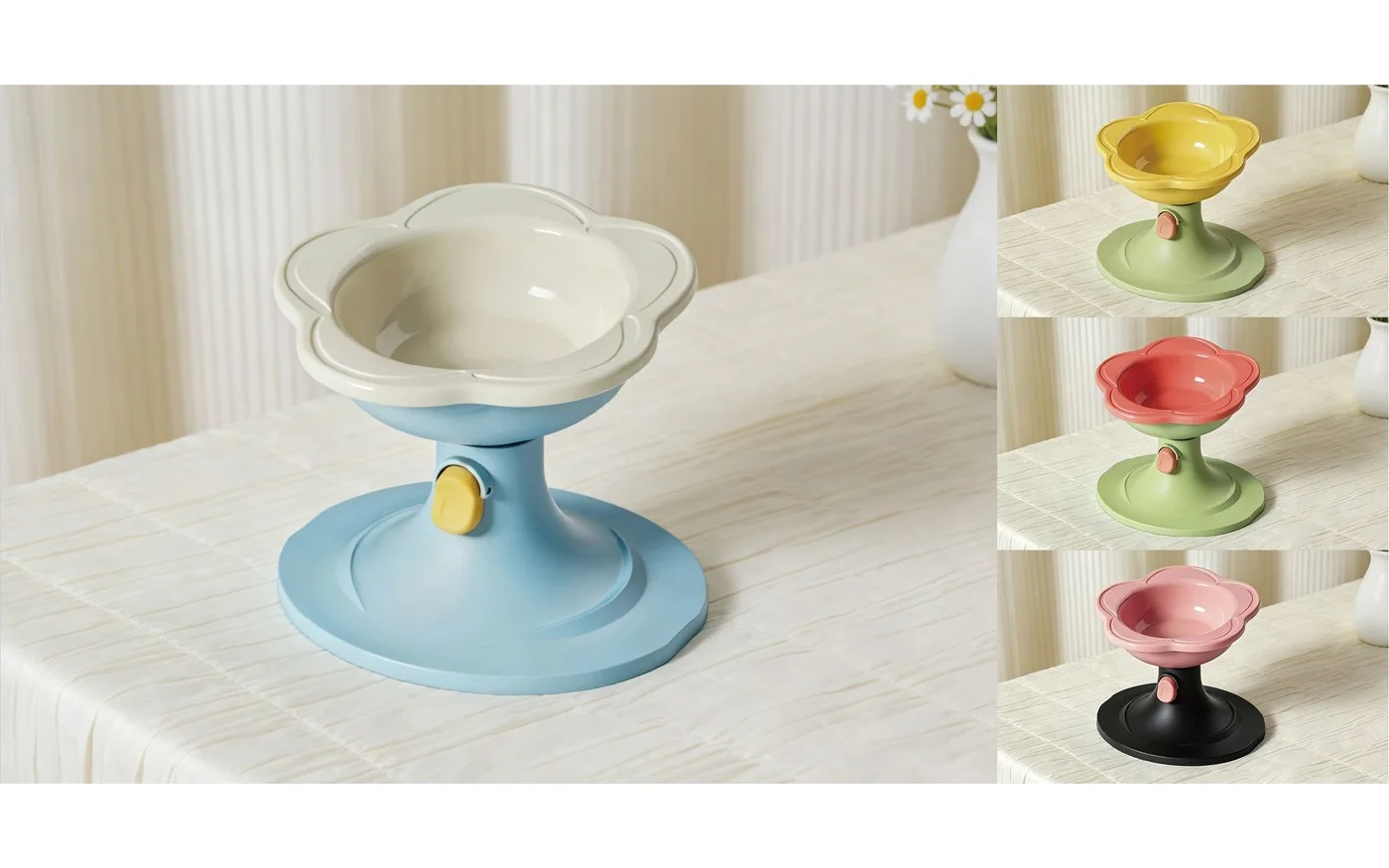
Ceramic earns its place when it's high-quality, lead-free, and — critically — intact. A heavy glazed ceramic bowl is great for water, because the weight keeps it from tipping, and it looks genuinely nice on the floor of a home where the bowl lives in the kitchen. The moment it chips, retire it. No exceptions. A [ceramic-style pet bowl](/products/flower-pet-bowl-20-5-18-5-21-cm) with a clean, food-safe glaze is a fine choice for a careful cat who eats neatly — just inspect it regularly the way you'd inspect your own dishes.
Plastic has one real job: temporary or disposable use. Travel, a puppy's first few weeks, an outdoor water bowl at a park. It's light, cheap, and unbreakable, and for a short stint those advantages outweigh the hygiene downside. The problem is never the first month of a plastic bowl — it's the second year, once the scratches have accumulated and it's quietly become a petri dish. If you use plastic, treat it as disposable and replace it often.
There's one more uncomfortable truth that reframes the whole conversation. The material matters less than the habit. A stainless steel bowl that never gets washed is dirtier than a plastic bowl that gets scrubbed and swapped every single day. Material is a multiplier — stainless makes good cleaning easier and more effective, while plastic makes even good cleaning fall short. So pick the right material, yes. But then do the unglamorous part: wash the bowl daily like you'd wash your own, and don't let yesterday's wet food sit in it overnight. A clean stainless bowl beats a pretty ceramic one that's been ignored all week.
The bottom line
Stop choosing your pet's bowl the way you'd choose a vase. The prettiest option is usually the one with the most to hide — micro-scratches in plastic, lead in a glaze, a chip waiting to happen in ceramic. Go with stainless steel for everyday food and water, keep a heavyweight ceramic bowl if you love the look and it's chip-free and lead-free, and reserve plastic for travel and temporary setups only. Then wash it daily, because even the best material can't save a bowl that never gets cleaned. Your pet won't thank you in words — but the clear chin, the settled stomach, and the vet bill that never comes are thanks enough.
Referenced in this guide
Keep reading