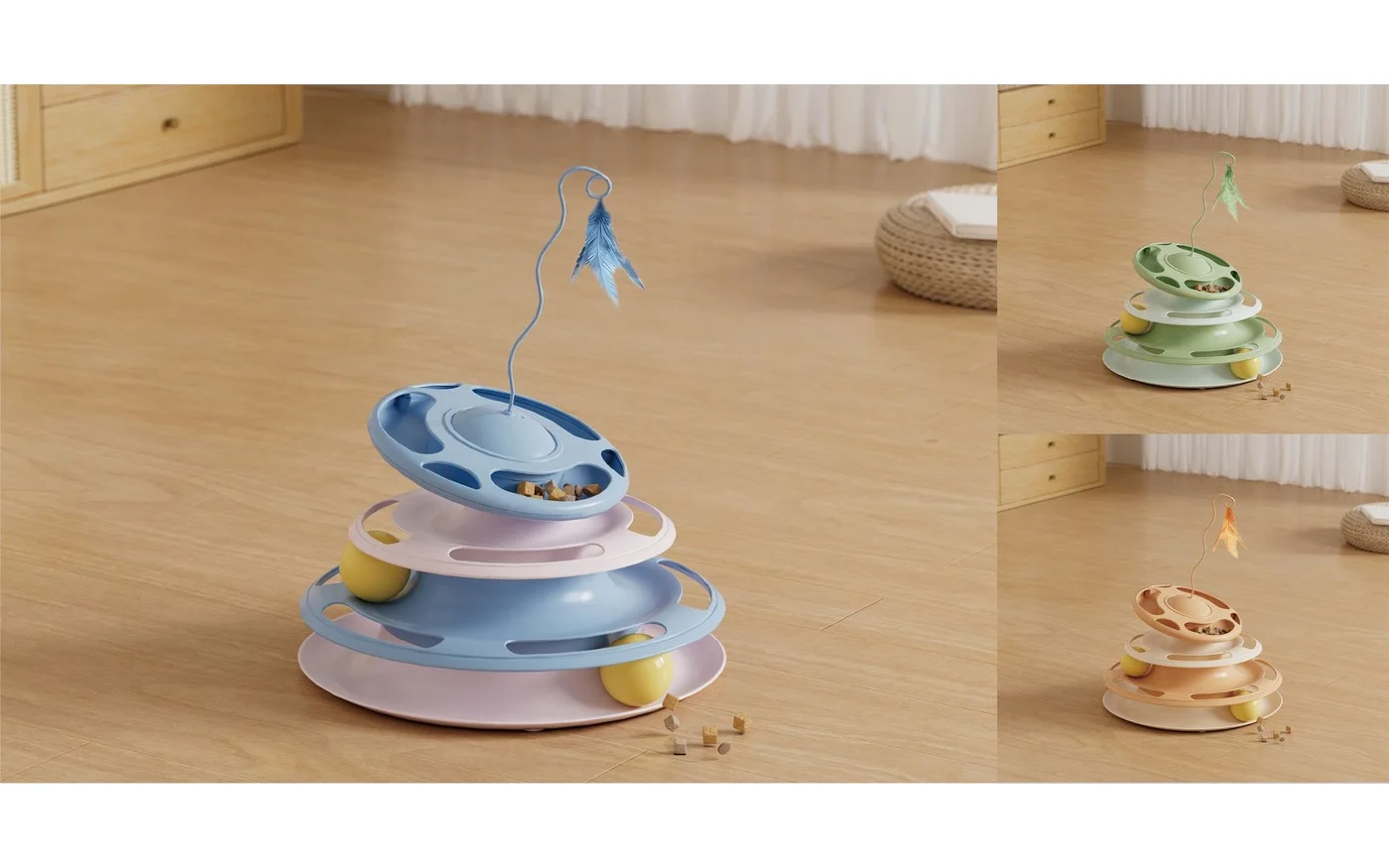
Beyond the Treat Dispenser: How Cognitive Play is the Real Key to Your Cat's Happiness
Think your cat just needs more toys? Think again. True contentment comes from cognitive engagement, which puzzle feeders expertly provide.
November 3, 2026 · 5 min read · 666 words
The current conversation around cat enrichment tends to oversimplify the problem. We hear "play more!" and the immediate assumption is that a feather wand or a shiny laser pointer is the answer. While these toys provide excellent gross motor exercise—the fun, physical romp that sends both cat and human into a temporary state of joy—they rarely satisfy a cat's most fundamental, and often overlooked, need: mental problem-solving.
A bored cat is a destructive cat. A rambunctious cat is an over-stimulated cat. But a cat whose mind is kept gently engaged? That cat is content, healthy, and profoundly relaxed. The difference between "fun" and "fulfillment" often comes down to how much critical thinking is involved.
The Cognitive Hunger: Why "Just Play" Isn't Always Enough
Cats are evolutionary geniuses. They are highly specialized predators, and their brains are wired for efficiency, problem-solving, and the satisfaction of a successful hunt. When we use a cat toy, we are engaging their instincts. When we use a puzzle feeder, we are tapping into their deep-seated need to hunt for resources.
Most commercial pet toys mimic simple hunting—the pounce and chase. Puzzle feeders, however, mimic the entire hunt cycle: locating the resource (the food), manipulating the environment to get to it, figuring out the mechanism (the puzzle), and finally, the satisfaction of the reward.
This difference is critical. The joy of a toy is fleeting; the satisfaction of a solved puzzle is deep, enduring, and mentally fortifying. It feels like a mini-masterpiece of resourcefulness, and that feeling—the 'aha!' moment—is pure cat therapy.
Deep Dive: The Science of Puzzle Solving for Felines
When your cat interacts with a puzzle feeder, they are doing more than just retrieving kibble. They are engaging in cognitive functions that mirror those of a complex machine:
- Spatial Reasoning: They must determine the feeder’s weak points or openings.
- Motor Planning: They must coordinate their paw movements to dislodge, push, or turn components.
- Persistence: They must endure repeated failures to find the solution, building resilience.
Ignoring this intellectual stimulation is like only giving a student textbooks and never letting them use the playground. Their physical capabilities are high, but their mental muscles atrophy.
So, how do you pick the right gear? It's not about the "coolest" looking feeder; it's about the level of complexity and the reward timing.
Choosing the Right Brain Teaser: From Beginner to Grandmaster
Not all puzzle feeders are created equal. Think of them less as toys and more as modular brain gyms.
1. The Simple Scoop (For Newbies): These are feeders where the cat simply has to bat or push a lever to release the food. They are excellent for starting out or for older, less mobile cats. The focus here is on basic motor skills and confidence building.
2. The Maze Solver (The Sweet Spot): These are the gold standard. They involve multiple interconnected tunnels, requiring the cat to navigate and sometimes lift small panels to get the food. This level of difficulty is perfectly challenging: hard enough to be satisfying, but not so hard that it causes frustration. This is where the biggest mental gains are found.
3. The Mechanism Puzzle (For Geniuses): These are the advanced, multi-step challenges. They might involve rotating rings, using specific tools (like a treat-dispensing wand attached to a lever), or solving a pattern. Only use these for cats that show consistent interest and patience. If the puzzle fails too often, the cat learns disappointment, not resilience.
Pro-Tip on Maintenance: The biggest mistake owners make is over-helping. If your cat struggles for more than five minutes, give them a small hint, but let them struggle for the bulk of the time. The fight is the fun.
We are more than just providers of snacks and beds; we are custodians of our pets' holistic well-being, and that means treating the mind with the same care we treat the body. By integrating cognitive play, we don't just keep them busy; we keep them thriving.
Keep reading