Open vs Enclosed vs High-Sided Litter Boxes: The One Cats Actually Prefer
We buy litter boxes for ourselves — enclosed, to hide the mess and contain the smell. A cat wants almost the opposite: open sightlines and a way out. The enclosed box that solves the human's problem is very often the one that quietly makes the cat stop using it. Here's how to choose the type your cat will actually accept.
October 27, 2026 · 6 min read · 1008 words
Here's a quiet conflict that plays out in millions of homes, and most people never realize it's happening. When we shop for a litter box, we shop for ourselves: something enclosed to hide the mess, something that contains the smell, something that looks less like a toilet sitting in the corner. When a cat "shops" for a litter box, it wants almost the opposite — wide open sightlines, multiple ways in and out, and a clear view of anyone approaching. The enclosed box that solves the human's problem is very often the box that quietly makes the cat miserable.
And the worst part is how the cat's complaint shows up. A cat that hates its box rarely stages a protest you can see. It just... stops using it, a little at first, then entirely. The "sudden" litter box problem that sends people to the vet or the internet is frequently not sudden at all — it's a cat that spent months telling you the box felt wrong, and you couldn't hear it because the box looked fine to you.
Why Cats and Humans Want Different Things
The root of the mismatch is evolutionary, and it explains almost everything. Cats are both predator and prey. That means a cat doing something as vulnerable as going to the bathroom is, on some deep level, watching for threats. A good litter box, from a cat's point of view, is one where it can see everything around it and has a route to escape if it needs one.
An enclosed box breaks both rules at once. It has a single small entrance, so the cat has to commit to going in and trusting nothing is behind it. The walls block its view, so it can't see what's approaching. For a confident, relaxed cat, that's fine. For an anxious cat, a skittish cat, or a cat that lives with another animal that ambushes it, an enclosed box can feel like a trap — and a trapped cat will eventually find somewhere safer to go, like the corner of the living room.
Humans, meanwhile, want the opposite for completely understandable reasons: we want the box hidden, the odor contained, the whole operation out of sight. Neither side is wrong. They're just optimizing for different things, and the box that wins is whichever side the buyer remembers to ask about.
The Three Types, Honestly
Here's the honest rundown of the three main forms, including what each one is quietly costing you.
Open boxes are the most cat-friendly. No walls, no roof, full visibility, easy in and out from any angle. Cats almost universally accept an open box. The cost is all yours: litter gets kicked and scattered, and there's nothing to contain the odor or hide the view. If your cat is anxious, picky, or older, open is the safe default — you trade your convenience for their comfort, and it's usually the right trade.
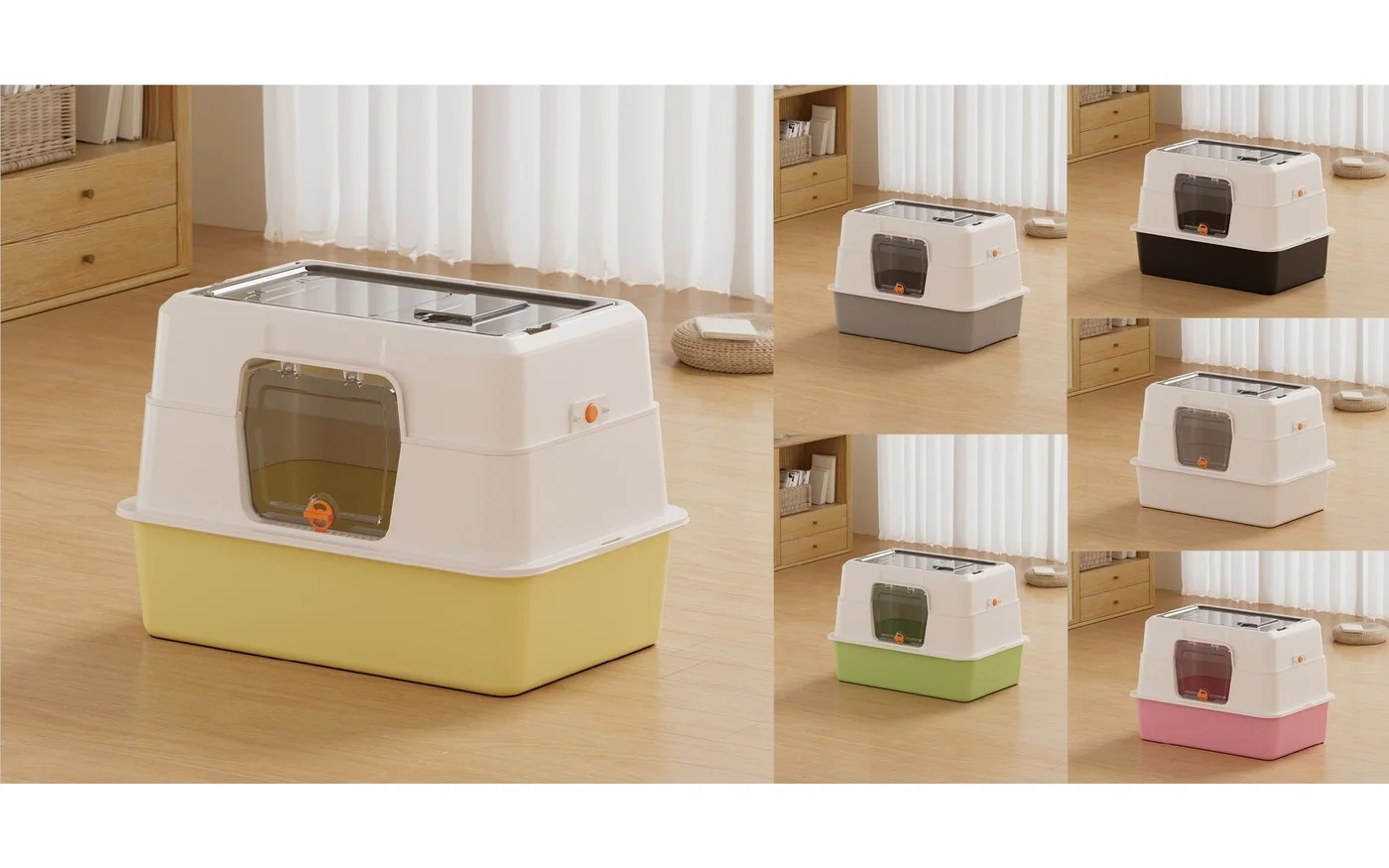
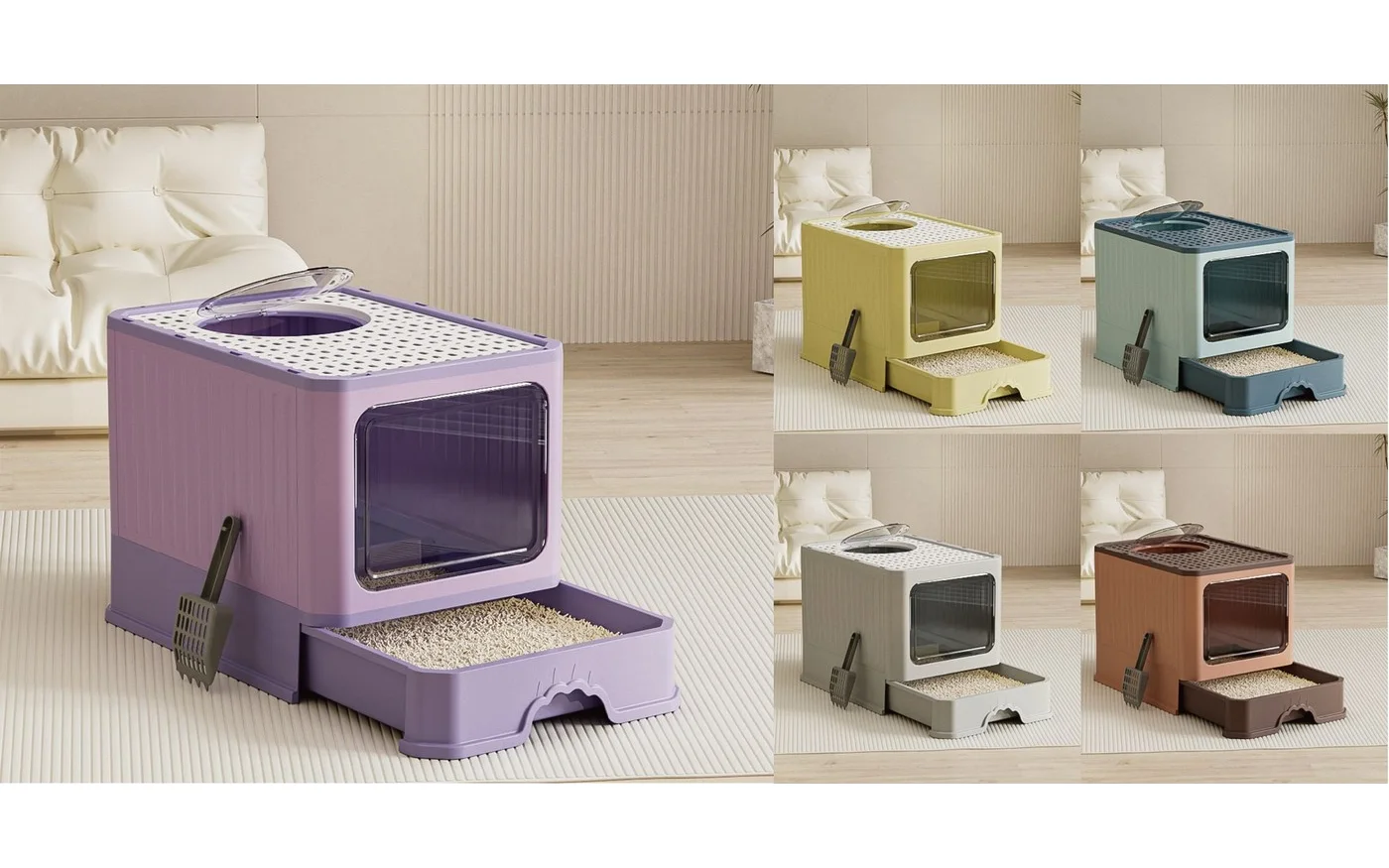
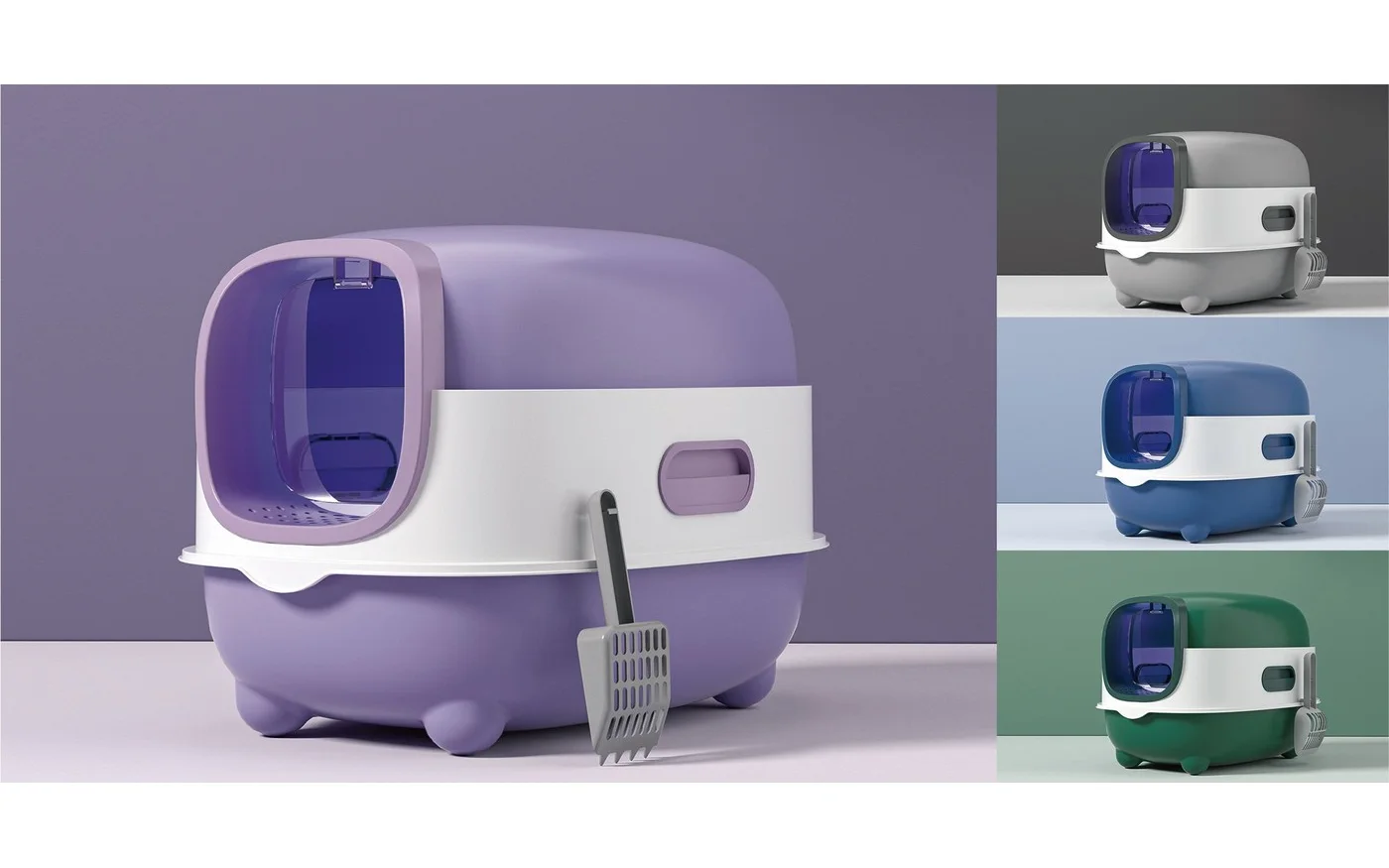
Enclosed boxes are the most human-friendly. They contain odor and hide the mess, and they look like a piece of furniture rather than a tray. The cost is the cat's: one entrance, restricted visibility, a feeling of being closed in. A confident cat in a calm home often does fine in one. A nervous cat, or a multi-pet home where one cat corners another, frequently does not. Enclosed boxes are also the most likely to be too small, because the shell makes them look bigger than the usable space inside.
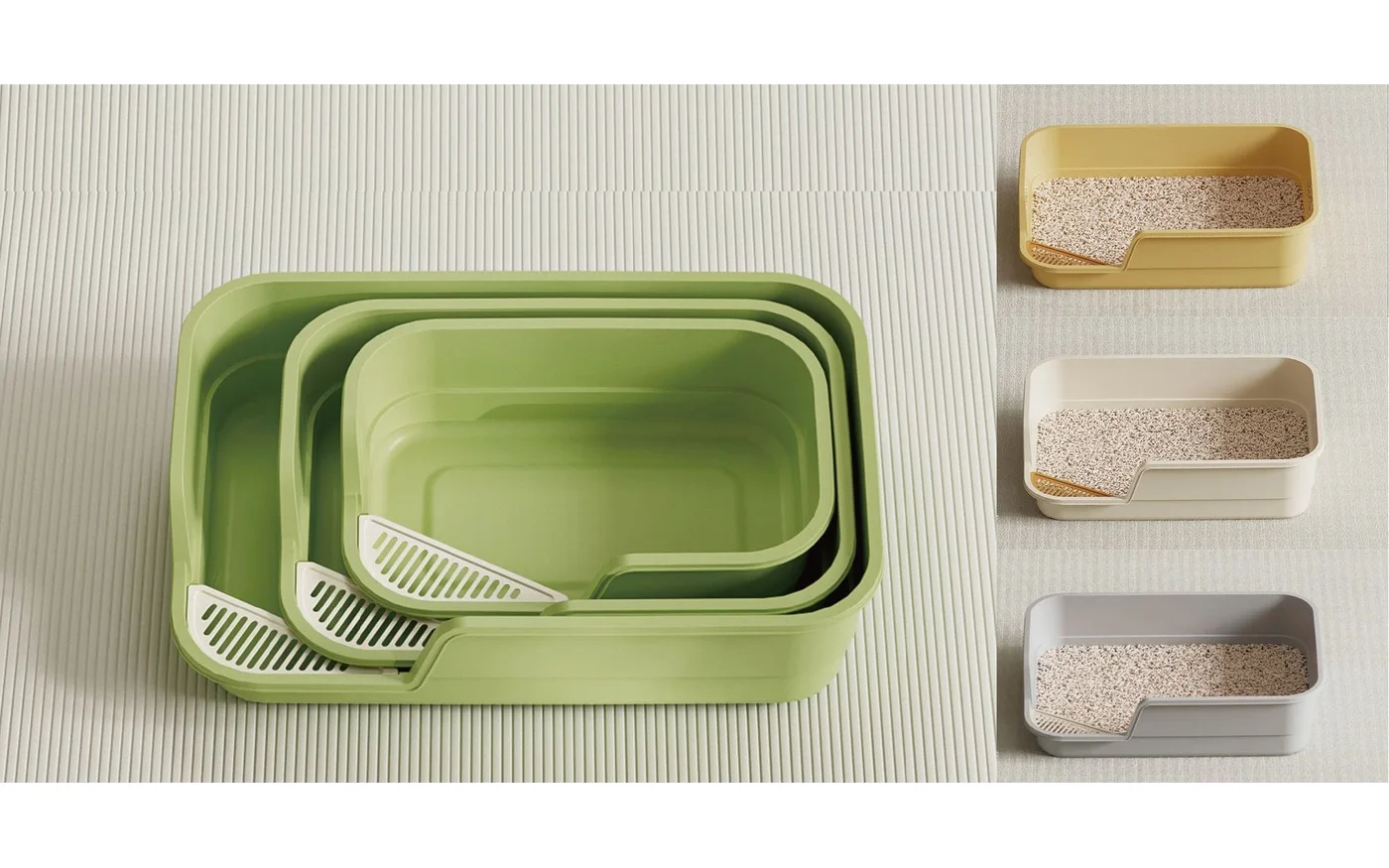
High-sided boxes are the middle ground that most people overlook. The top stays open — so the cat keeps its sightlines and escape routes — but the walls are tall, which solves the two most common complaints: a cat that digs and kicks litter everywhere, and a cat that stands to pee and overshoots the edge. If your problem is litter scatter rather than odor or sightlines, a high-sided box gives you most of the cleanliness of an enclosed box without the anxiety tax.
How to Pick Without Guessing
The honest way to choose is to stop asking "which looks best" and start asking "what does my cat actually do." Three questions usually settle it.
Does your cat kick litter everywhere? Then high-sided or semi-enclosed is your answer — you get the tall walls without taking away the open top.
Is your cat anxious, skittish, or new to your home? Then go open, at least until it's settled. You can always add a higher-sided or covered option later, but you can't easily undo the damage of a cat that's learned the box is scary.
Are you the one who's bothered — by odor, or by the sight of the box? Then an enclosed box is a legitimate choice, but only if your cat is confident and the box is genuinely large enough for it to turn around and dig comfortably. An enclosed box that's too small is the single most common reason an otherwise happy cat starts going next to the box instead of in it.
And for homes with multiple cats, the rule everyone should know: more boxes, not more elaborate ones. The guideline is one box per cat plus one extra, and with multiple cats, open boxes scattered through the home beat a single fancy enclosed box every time — because the real issue in a multi-cat home is never odor. It's that one cat can block another from the only box.
The Bottom Line
Here's the honest takeaway, and it's the opposite of what the packaging wants you to believe: the best litter box is not the one that looks nicest or hides the most. It's the one your cat will reliably, happily use — because a box that gets used every time is doing more for your home's smell and your cat's health than the most expensive enclosed box sitting unused in the corner.
When in doubt, choose the cat. Open, with tall sides if there's mess. The cat will almost always reward you for it, in the only way that matters.
Referenced in this guide
Keep reading