Your Pet's Water Fountain Is Dirtier Than the Bowl It Replaced
A water fountain looks like the cleaner, more hygienic upgrade — running water, a filter, the works. The honest truth is the opposite: a fountain builds up biofilm slime faster than a plain bowl ever did, and most of it is invisible. Here's how often to actually clean it, and how to do it right.
October 24, 2026 · 6 min read · 1120 words
Here's a truth nobody puts on the box: the water fountain you bought to keep your pet's water fresher is probably the dirtiest drinking surface in your house. Not because you're negligent — because the thing is designed in a way that works against you, and it does it invisibly.
Think about what a fountain actually is. A plain bowl is a simple surface: water sits, your pet drinks, you dump it, you scrub it, you're done. A fountain is a small plumbing system. Water runs through a pump, past plastic walls, over a filter, and back into a reservoir — over and over, 24 hours a day, at exactly the temperature bacteria like best. All that running water isn't cleaning anything. It's aerating a broth.
So this guide isn't about shaming anyone's setup. It's about the gap between how clean a fountain looks and how clean it actually is, and how to close that gap without turning yourself into a full-time dishwasher.
Why the "clean-looking" fountain is a slime factory
The technical name for what grows inside your fountain is biofilm — a thin, slippery layer of bacteria that glues itself to wet surfaces. You've felt it: that faintly slick coating on the inside of the reservoir, on the pump housing, on the underside of the spout. It builds up fast because fountains are, to a microbe, paradise. Warm-ish, constantly wet, gently oxygenated, and fed by whatever your pet's mouth drops in — saliva, food crumbs, a bit of fur, dust.
The part that catches people off guard is that biofilm is invisible in its early stages. The water looks clear. It doesn't smell yet. Your pet keeps drinking normally. Then one day you notice the slime, or the water starts to taste faintly off to a nose better than yours, and by then the colony has been established for a while.
This is the honest inversion of the marketing: a plain stainless bowl that sits still and gets changed daily stays cleaner than a fountain that's cleaned weekly. The filter doesn't rescue you, either. A carbon filter catches debris and mild odors; it does almost nothing against the bacterial film coating the surfaces it's supposed to protect. Filtered water running over a slimy pump is still slimy water.
How often you should actually clean it
Most fountain instructions say something vague like "clean regularly." Here's a schedule that matches the biology instead of the marketing.
Rinse and refill daily. Top off isn't enough — dump the water and refill it fresh every day, the same way you would a bowl. This alone flushes out a lot of the food source before a colony can take hold.
Full disassembly and scrub every 3–5 days. This is the non-negotiable part. Every few days the fountain needs to come fully apart — reservoir, pump, impeller, filter housing, spout — and get washed with warm water and a mild soap, then rinsed until there's zero soap residue. If you can't commit to doing this at least twice a week, the honest advice is to use a plain bowl instead. A neglected fountain is genuinely worse for your pet than a simple bowl you actually wash.
Replace the filter on the schedule, and don't trust it as a cleaning shortcut. Filters are for taste and debris, not for making deep cleaning optional. A used filter is also a wet, porous surface — meaning it can harbor the very bacteria you're trying to avoid.
Deep clean the pump monthly, or the moment it slows down. The pump impeller is the most-overlooked surface in the whole unit. It's submerged, constantly wet, and covered in tiny crevices. Pull it open and scrub the impeller and the chamber it sits in. A fountain that's flowing more slowly than usual is usually telling you the pump is gunked up.
The uncomfortable summary: if you currently clean your fountain "when it looks dirty," you're cleaning it days to weeks too late. The goal isn't to remove visible slime; it's to interrupt the colony before it becomes visible at all.
How to clean it without turning it into a chore
The reason people under-clean isn't laziness — it's friction. The more annoying the disassembly, the longer you'll put it off, and the worse it gets. So when you're choosing or evaluating a fountain, the single most important feature is: how fast can I take this apart and get it genuinely clean?
Fewer parts is better than more. Every seam, gasket, and snap-fit piece is a crevice where biofilm hides and a step between you and a clean unit. A fountain with five parts you can strip and wash in two minutes beats a feature-packed one with twenty parts you dread opening.
Shape matters more than looks. Deep, narrow reservoirs and tight corners are hard to scrub; a wide, shallow, open basin you can get a sponge into cleans faster. Fancy sculpted designs collect film in places your fingers can't reach.
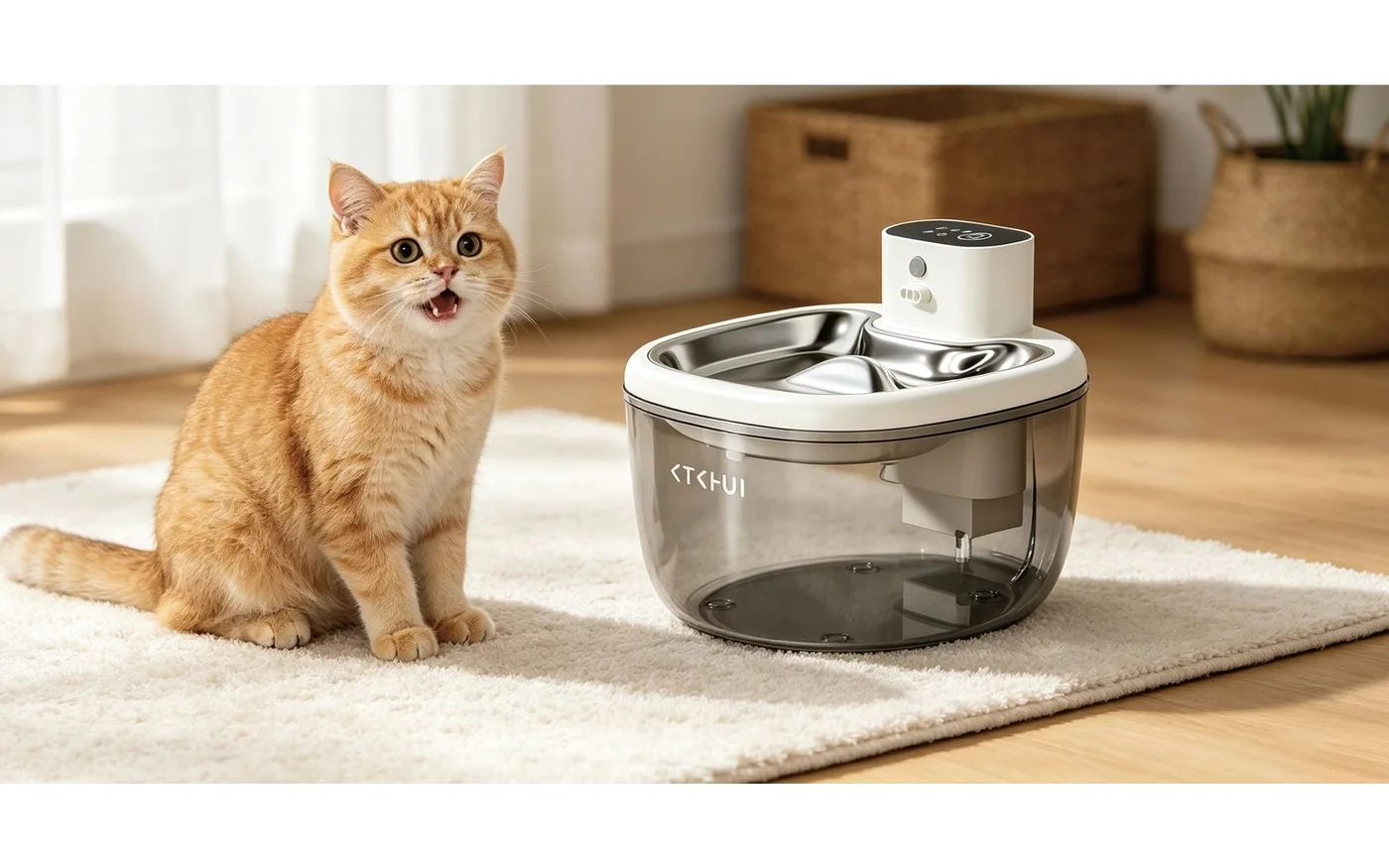
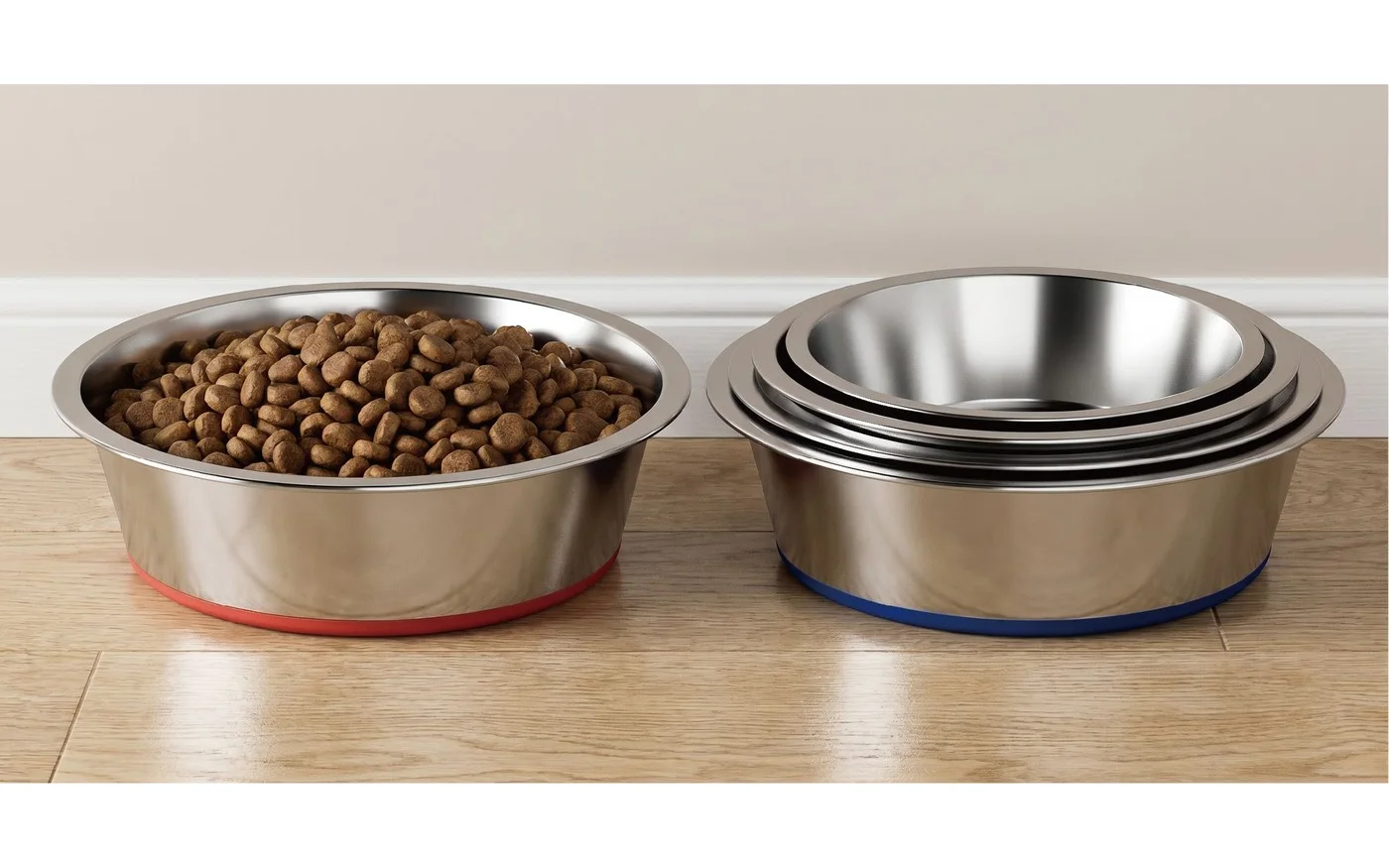
Material beats marketing. Stainless steel is genuinely easier to keep clean than plastic, because it doesn't scratch into micro-crevices the way plastic does. Scratches are where bacteria move in. A stainless steel bowl has a smooth, non-porous surface that rinses clean; a scratched plastic basin becomes a slime trap no matter how often you wash it.
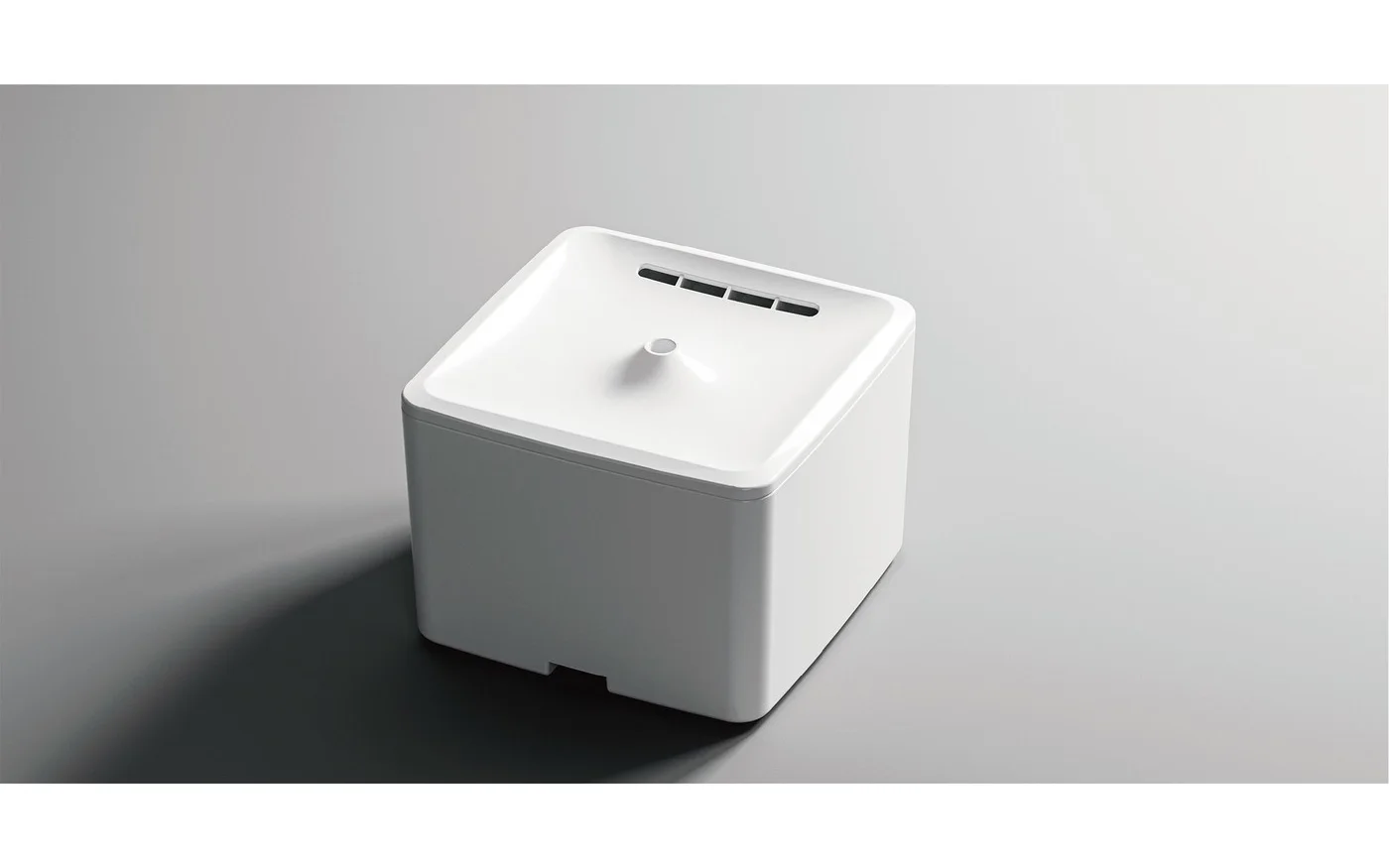
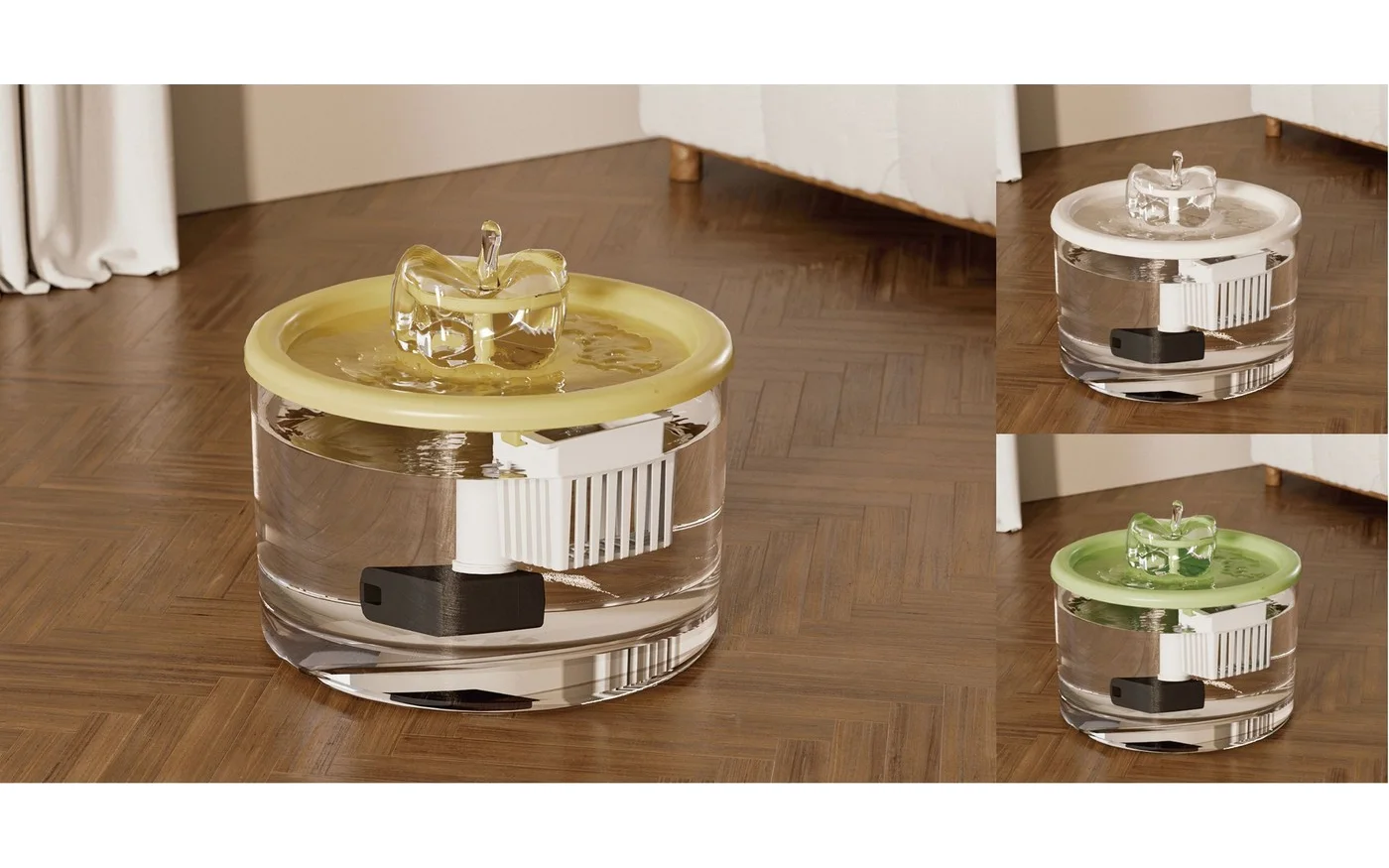
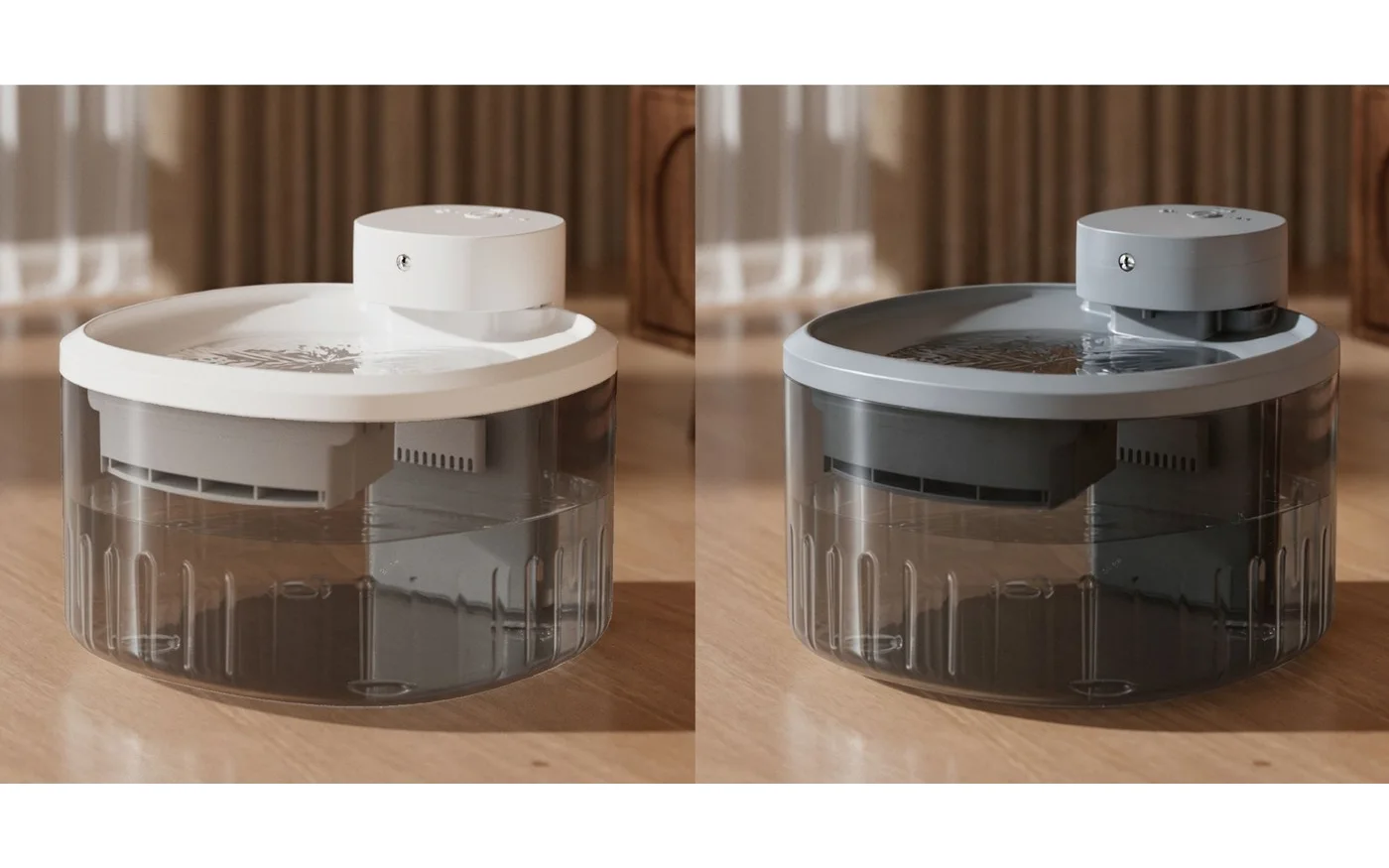
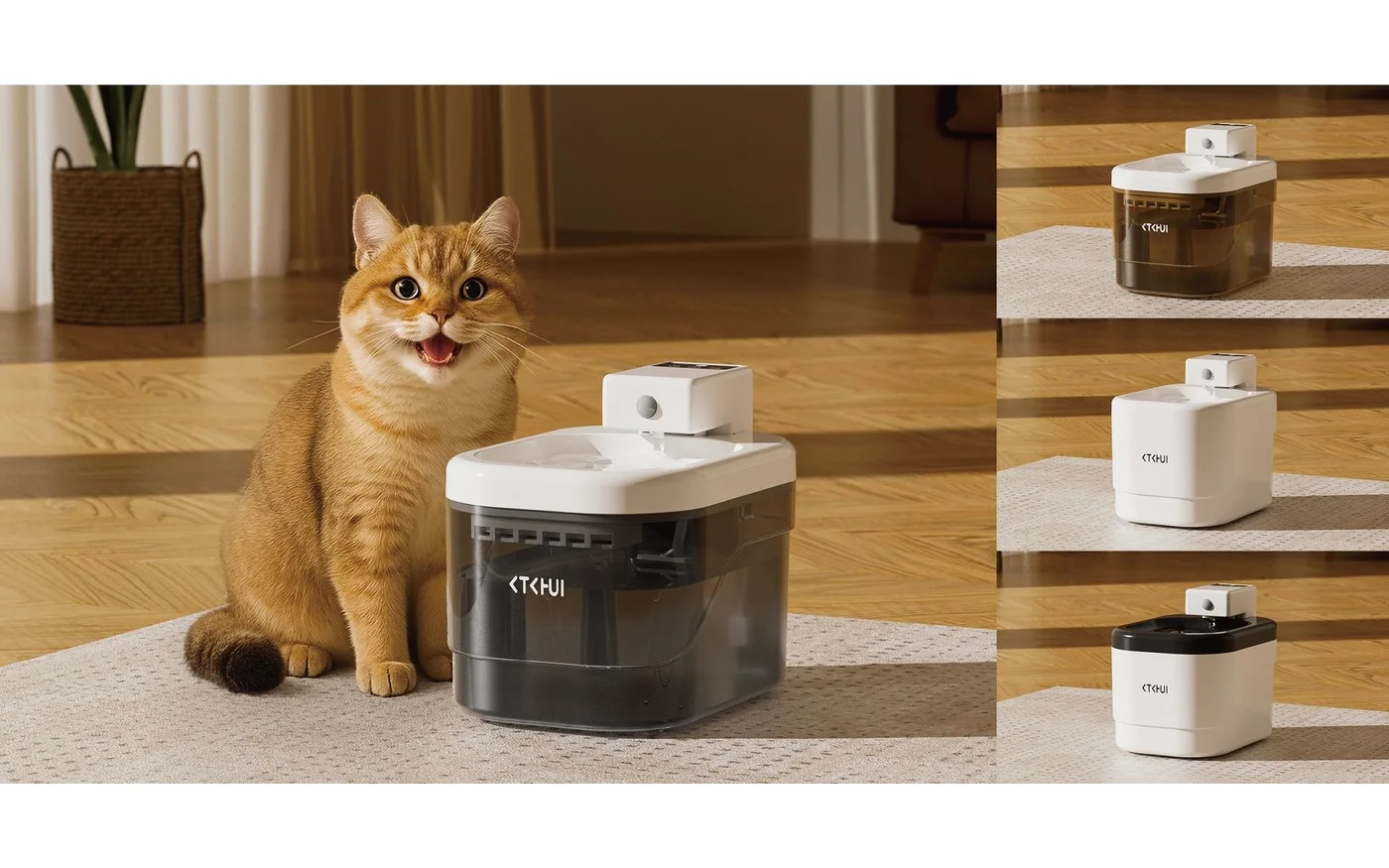
Pick a fountain you'll actually maintain. A simple, open-design fountain with an easy-to-remove pump will get cleaned on schedule because it's painless. A round fountain with a smooth basin and minimal crevices is a solid middle ground. If you travel or want a fountain that's easier to move for cleaning, a cordless model removes one more bit of friction — no cord to fight while you carry it to the sink.
The pattern is the same every time: the best fountain isn't the one with the most features. It's the one you'll actually take apart twice a week.
The short version
- A fountain is a small plumbing system, not a bowl. Running water aerates and warms it into a biofilm factory, and the slime is invisible until it's been there a while.
- The filter doesn't make deep cleaning optional. It handles taste and debris, not the bacterial film on the surfaces.
- Rinse and refill daily; full disassembly and scrub every 3–5 days; deep-clean the pump monthly or when flow slows.
- If you can't commit to twice-a-week scrubbing, use a plain bowl. A clean bowl beats a neglected fountain every time.
- Choose the fountain you'll actually maintain: fewer parts, an open shape you can scrub, and smooth stainless steel over scratchable plastic.
- A slow fountain is a dirty pump talking to you. Listen to it.
Referenced in this guide
Keep reading