How to Clean a Dog Bed — and Why Washing the Cover Isn't Enough
Your dog spends 12+ hours a day on its bed — and that bed is quietly filling with dead skin, dust mites, yeast, and flea eggs. The mistake almost everyone makes is washing the cover and calling it done. The cover was never the problem; the filling is. Here's how to actually clean a dog bed, and the design that barely needs cleaning at all.
October 26, 2026 · 6 min read · 1048 words
Your dog spends more time on its bed than almost anywhere else — twelve, fourteen, sometimes sixteen hours a day. It's where the dog sleeps, sheds, drools, licks its paws, and occasionally throws up. And here's the part almost nobody wants to think about: that soft, cozy, much-loved bed is quietly accumulating everything your dog carries around with it. Dead skin cells, dust mites, yeast, flea eggs, and the faint odor that tells you it's long past time. The spot you think of as the coziest place in the house is often the dirtiest thing in it — dirtier, gram for gram, than plenty of surfaces you'd never dream of letting sit for months.
And the first mistake people make when they finally decide to fix it is the one that feels the most like progress. They unzip the cover and wash it. The cover comes out clean and fresh, the bed looks fine again, and they think the job is done. It isn't. The cover was never the problem.
Why the Cover Alone Doesn't Count
Here's the counterintuitive part, and it's worth sitting with for a second: the removable, machine-washable cover is the clean part of the bed. It's a thin layer of fabric that gets washed and dried and was never the main event anyway. The problem lives underneath it — in the filling.
The filling is where everything settles. It's dark, warm, slightly damp, and full of nooks for stuff to fall into. Dead skin — yours and the dog's — drifts down through the cover and into the stuffing, where it feeds dust mites by the thousands. Moisture from a wet paw or a slobbery nap soaks in and never quite dries, and in that damp warmth, yeast and bacteria quietly set up shop. If your dog has ever had fleas, the eggs don't live on the dog — they fall off into the bedding. The cover is a curtain. The filling is the room behind it, and that room has not been cleaned.
So the honest rule is uncomfortable but simple: if you only wash the cover, you're washing the least important part of the bed and leaving the actual reservoir untouched. You might as well vacuum the welcome mat and call the whole house clean.
How to Actually Wash a Dog Bed
The real job starts with the label, and most people skip it because it sounds boring. Don't. Dog beds are made from a wild mix of materials — memory foam, polyester fill, cedar chips, bolsters, non-slip bases — and they don't all survive a hot wash. Read what the tag actually says before you put the whole thing in the machine, because the wrong cycle turns a dirty bed into a lumpy, unusable one.
When you can wash it, wash the whole bed, not just the cover. Use the hottest water the label allows — heat is what actually kills dust mites and most of what's living in there, and lukewarm water does far less than people assume. Add a pet-safe enzyme cleaner if there's been an accident; it breaks down the urine proteins that regular detergent just smears around, and it's the difference between "looks clean" and "is clean."
Then comes the step that matters more than all of the above: dry it completely. Not mostly. Completely. A bed that comes out of the dryer or off the line even slightly damp goes right back to being a petri dish the moment the dog lies on it — the leftover moisture is exactly what yeast and mildew need to come back worse than before. If the filling is thick, this can take longer than you think; run a second low-heat cycle or leave it in the sun until there's no cool, damp spot left anywhere. If you've ever smelled a dog bed that seems to get stinkier after you wash it, that's the reason — you sealed moisture back in.
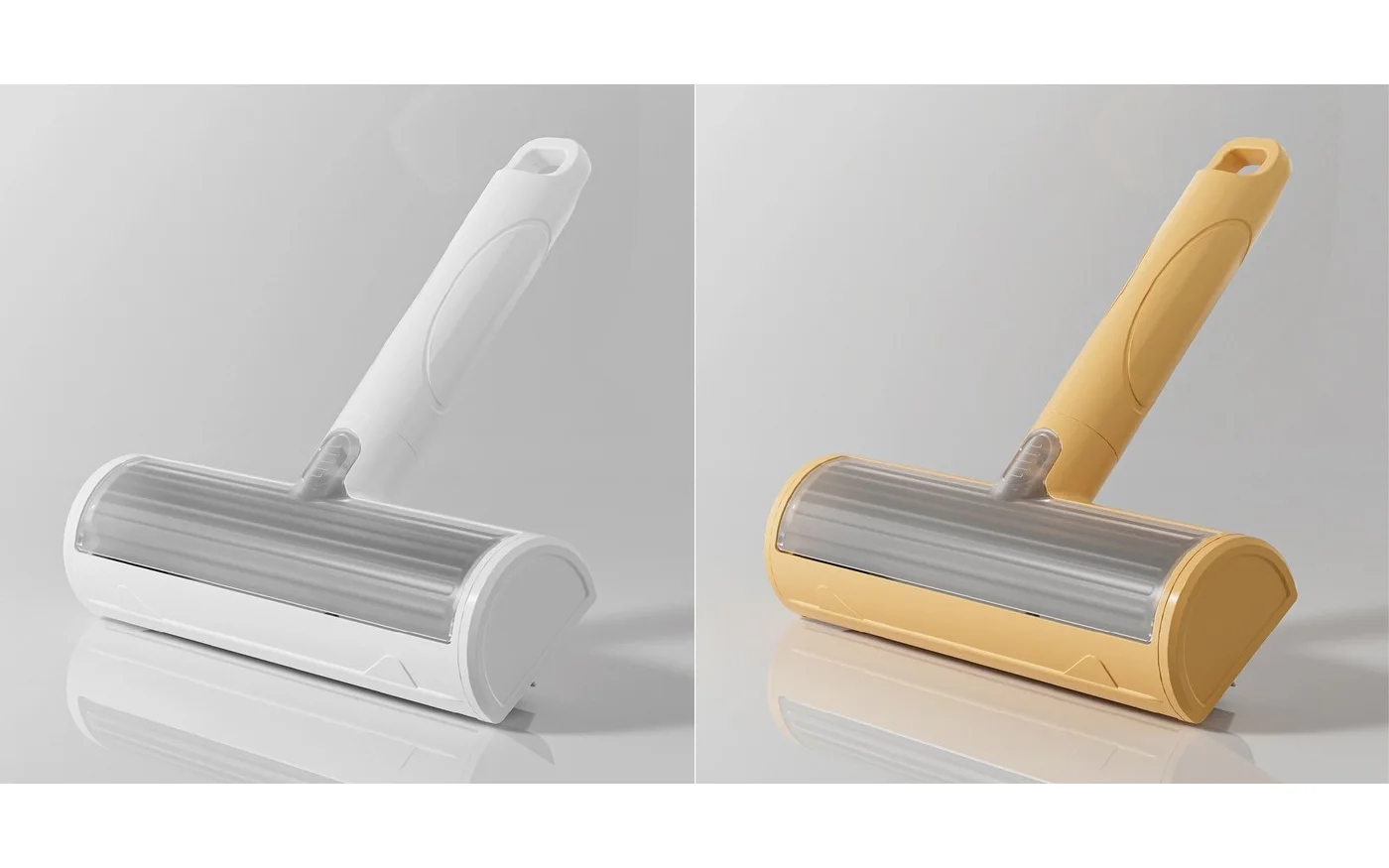
A few seconds of prep before washing saves you a fight too. Give the bed a quick pass with a reusable lint roller or a rubber glove to pull the loose hair off first, so you're not sending a dog's worth of fur into your washing machine's filter and drum. It's the step that keeps the bed — and your washer — from smelling like wet dog for a week.
The Bed That Barely Needs Cleaning
Now for the honest part, because there's a reason this chore never seems to end, and it isn't that you're lazy. A plush, stuffed bed is designed to be cozy, absorbent, and cushion-y — and every single one of those qualities is also what makes it hard to keep clean. You can fight it with a better routine, and you should. But there's a quieter answer most people only stumble on after they're already frustrated: pick a bed that was never going to be a germ reservoir in the first place.
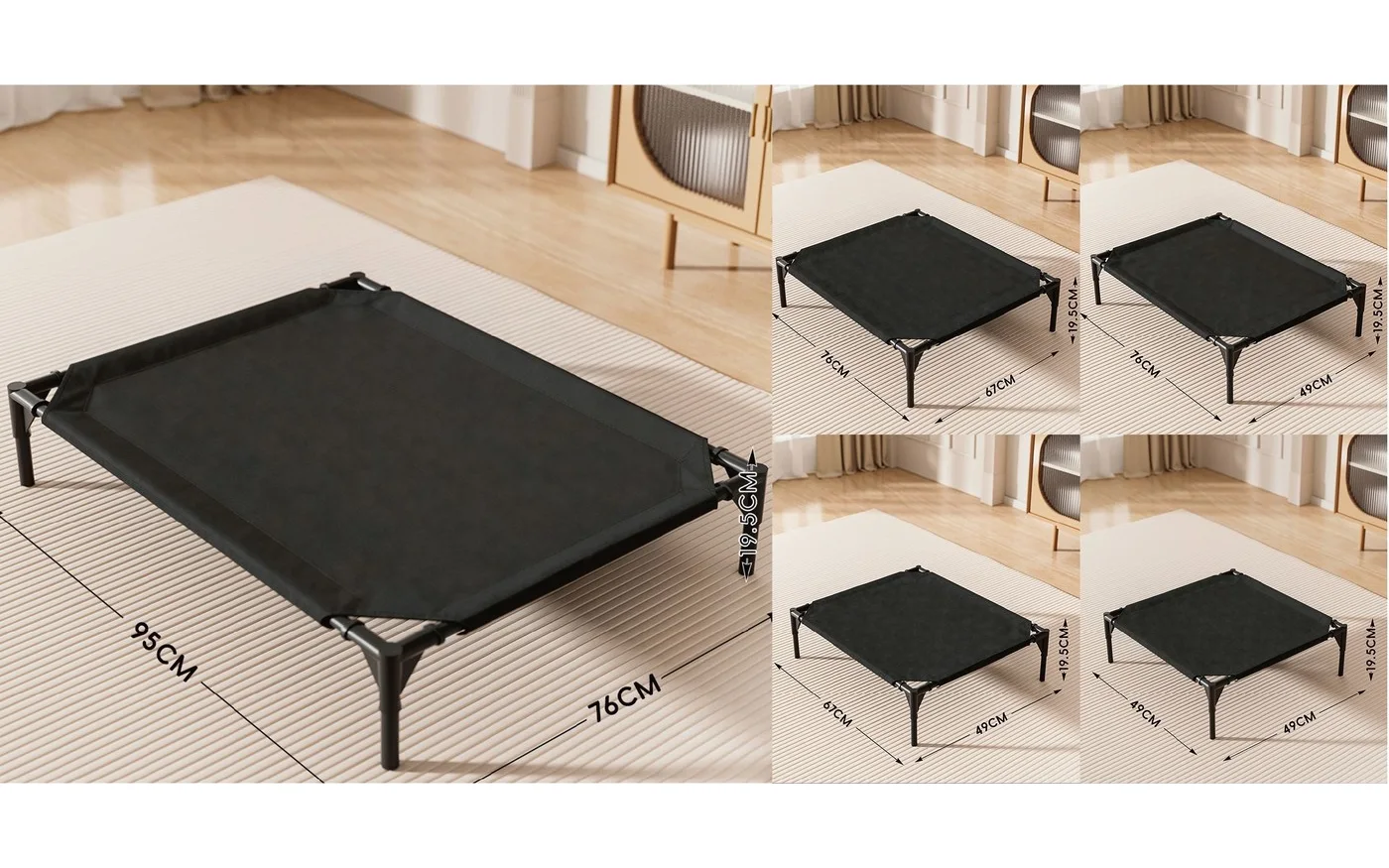
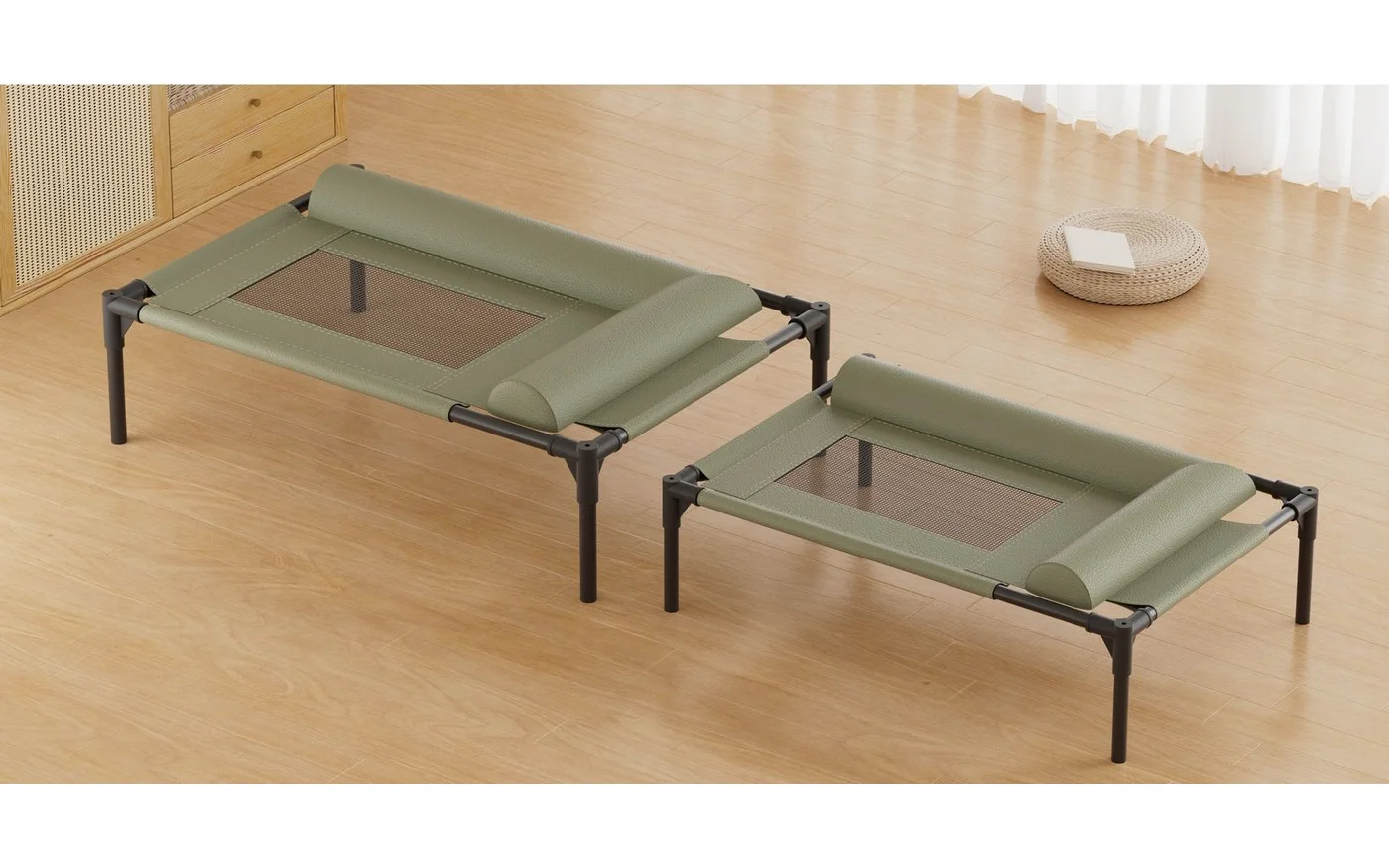
An elevated dog cot — the kind with a breathable mesh stretched over a frame — sidesteps the entire problem by removing the stuffing. There's nothing for moisture, mites, or flea eggs to burrow into. Air circulates underneath, so it dries fast and stays cool. Hair and dirt fall through instead of settling in. And when it does need cleaning, you wipe the frame and the mesh and you're done — no cover to unzip, no filling to dry for two days, no mystery smell returning a week later. A larger elevated cot gives a bigger dog the same deal. It's not as plush as a stuffed bed, and that's precisely the point: a cot is the bed for people who want their dog to have a clean place to sleep without making it a part-time job.
That's the trade worth naming honestly. A plush bed and a clean bed are not the same goal, and you have to choose which one you're actually optimizing for. If you want the soft, sink-into-it cushion, you're signing up for the full washing routine, every time, forever — and now you know how to do it right. If you'd rather not, the cot is the honest shortcut, and it keeps your dog off a surface that's quietly been getting grosser every week.
Referenced in this guide
Keep reading