How to Choose an Automatic Pet Feeder (The Fancy Features Are a Trap)
An automatic feeder looks like the fix for everything — weight control, begging, the 5 a.m. wake-up call. The honest truth is most people buy one for the wrong reason, and the fanciest models are often the least reliable. Here's what an automatic feeder actually does, which features matter, and why the ones with cameras and apps are usually a trap.
October 26, 2026 · 6 min read · 917 words
There's a fantasy attached to the automatic pet feeder, and it's easy to spot in the marketing. Buy this, the ads imply, and the problems solve themselves: the cat stops waking you at dawn, the dog stops inhaling its food, the extra weight melts off, the guilt of a long workday disappears. Set it, forget it, and become a better pet parent in the process.
The honest truth is less flattering, and knowing it up front will save you money. An automatic feeder is a genuinely useful tool — but it does exactly one thing well, and almost nobody buys it for that one thing. Worse, the models most aggressively marketed as "smart" are usually the least reliable, and reliability is the entire point of the device. Here's how to actually choose one.
What an automatic feeder does (and doesn't)
Strip away the marketing and an automatic feeder is a very simple machine: it holds a reservoir of dry food and drops a measured portion into a bowl on a schedule you set. That's it. The whole device exists to deliver consistency — the same amount of food, at the same times, every single day, without you needing to be there.
That consistency has real value. If your pet is overweight, portion control is the single most effective intervention, and a feeder enforces it mechanically rather than through willpower. If your schedule is unpredictable, a feeder makes sure dinner happens at 6:00 even when you're stuck at work until 7:30.
What it won't do matters just as much. It won't stop a dog from begging — food still arrives, and the dog learns the feeder's schedule as fast as it learned yours. It won't fix separation anxiety, because the anxiety isn't about hunger. And it won't magically slim down a pet if you fill the reservoir with the wrong amount or the wrong food. The feeder is a tool, not a trainer. Expect consistency from it, not transformation.
The features that matter — and the traps
This is where most people overspend and end up with a worse product.
What actually matters:
Portion accuracy. A feeder that drops 30 grams one day and 45 the next is worse than useless for weight control. You want precise, repeatable portions. This is the single most important spec and it's the least glamorous.
Reliability. A feeder has one job it must never fail at: dispensing food when it's supposed to. Jams, clogged chutes, and screens that freeze are not minor annoyances — they're your pet missing a meal. The simpler the mechanism, the fewer ways it can fail.
Capacity and food type. Most automatic feeders are dry-food only. If your pet eats wet food, an automatic feeder is mostly the wrong tool — wet food needs refrigeration and can't sit in a hopper. Check the hopper capacity against how long you want it to run between refills.
Cleaning and sealing. A hopper that doesn't seal lets air in and food goes stale. A feeder that's a pain to disassemble won't get cleaned, and stale, oily residue builds up — which is its own health issue. Look for something you can actually take apart and wash.
The traps, honestly named:
The WiFi-enabled, camera-equipped, app-controlled feeder is the poster child for paying more for less reliability. Every "smart" feature is another point of failure: a dead battery, a dropped connection, a server outage on the app's end — and suddenly the schedule doesn't run. A camera doesn't feed your pet; it feeds your anxiety by letting you watch your pet not being fed when the app glitches. Voice recordings of your own voice telling your pet to eat? Your pet does not care, and neither should you. For the overwhelming majority of people, a simple, sturdy, well-built feeder with precise portions beats a smart one every time.
How to pick the right one
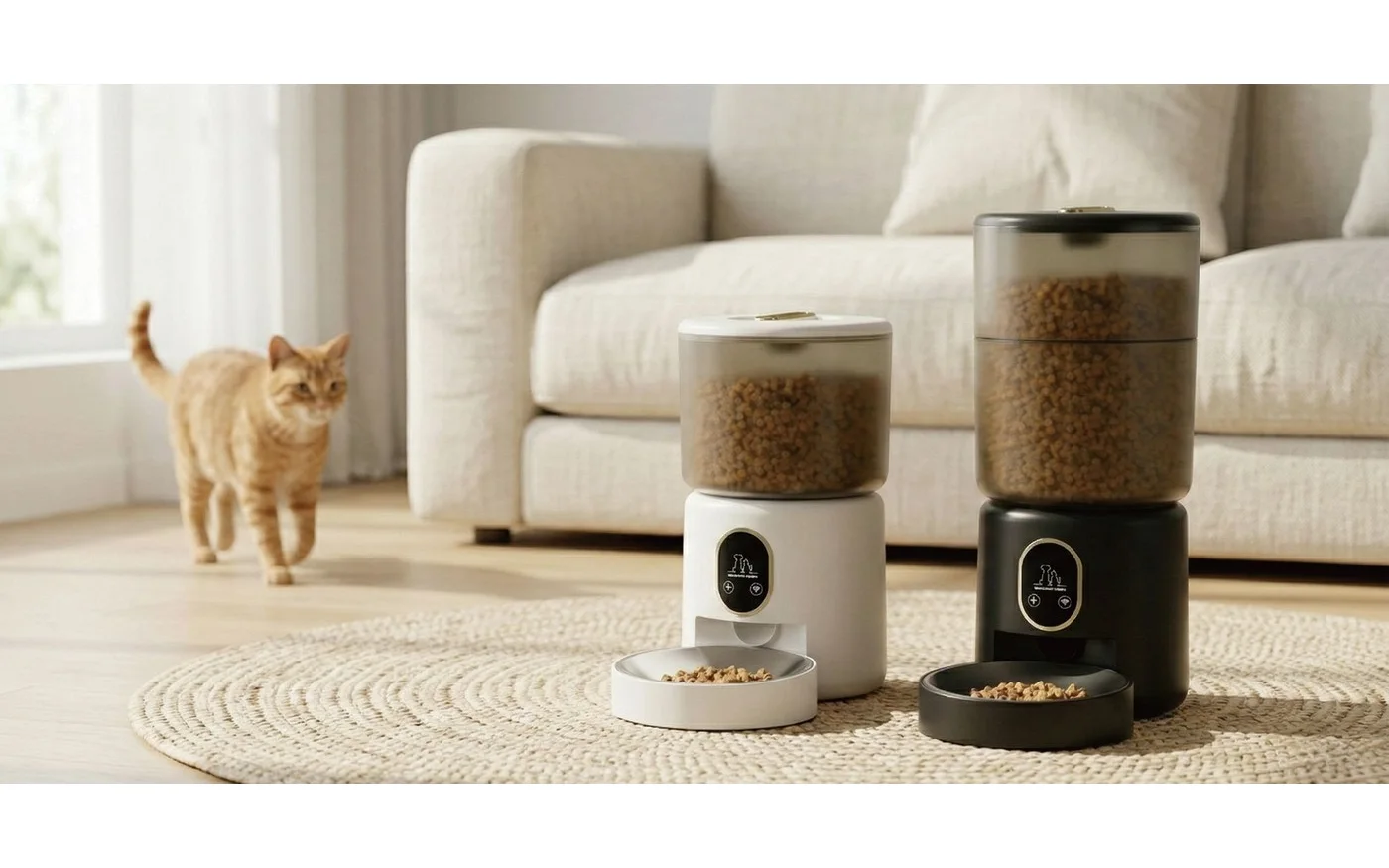
Match the capacity to the pet and the gap. A single cat eating twice a day needs far less than a big dog or a multi-pet household. The [automatic feeder](/products/automatic-feeder) is a solid, no-nonsense starting point for a cat or small dog — precise portions, simple mechanism, nothing to break. For larger appetites or multi-pet setups, a [bigger-capacity automatic feeder](/products/automatic-feeder-30-30-18-cm) means you're not refilling every other day.
Know your schedule reality. If you're away long hours or travel occasionally, reliability and a battery backup matter more than anything. If you're home every day and just want portion control, a basic unit does everything you need.
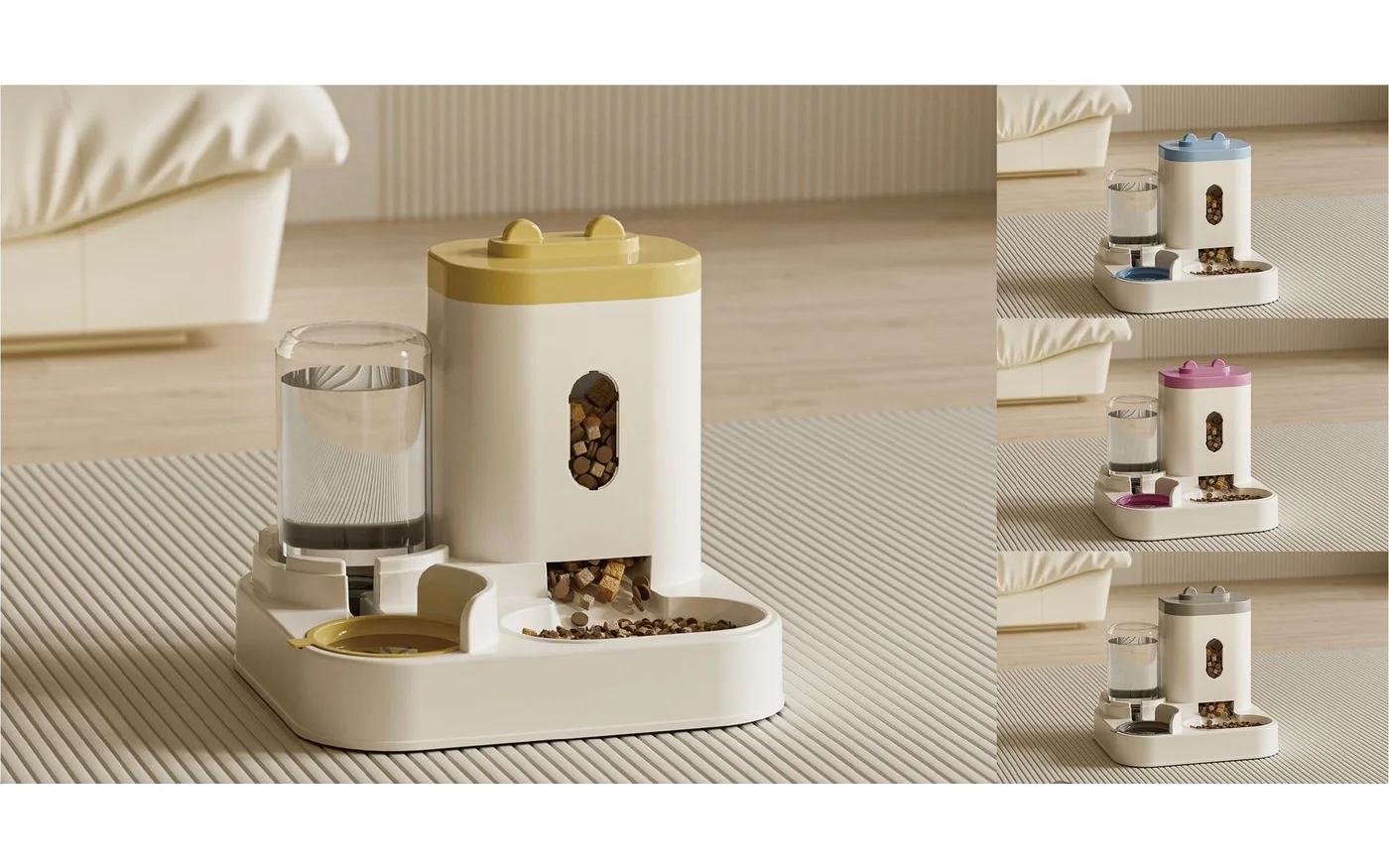
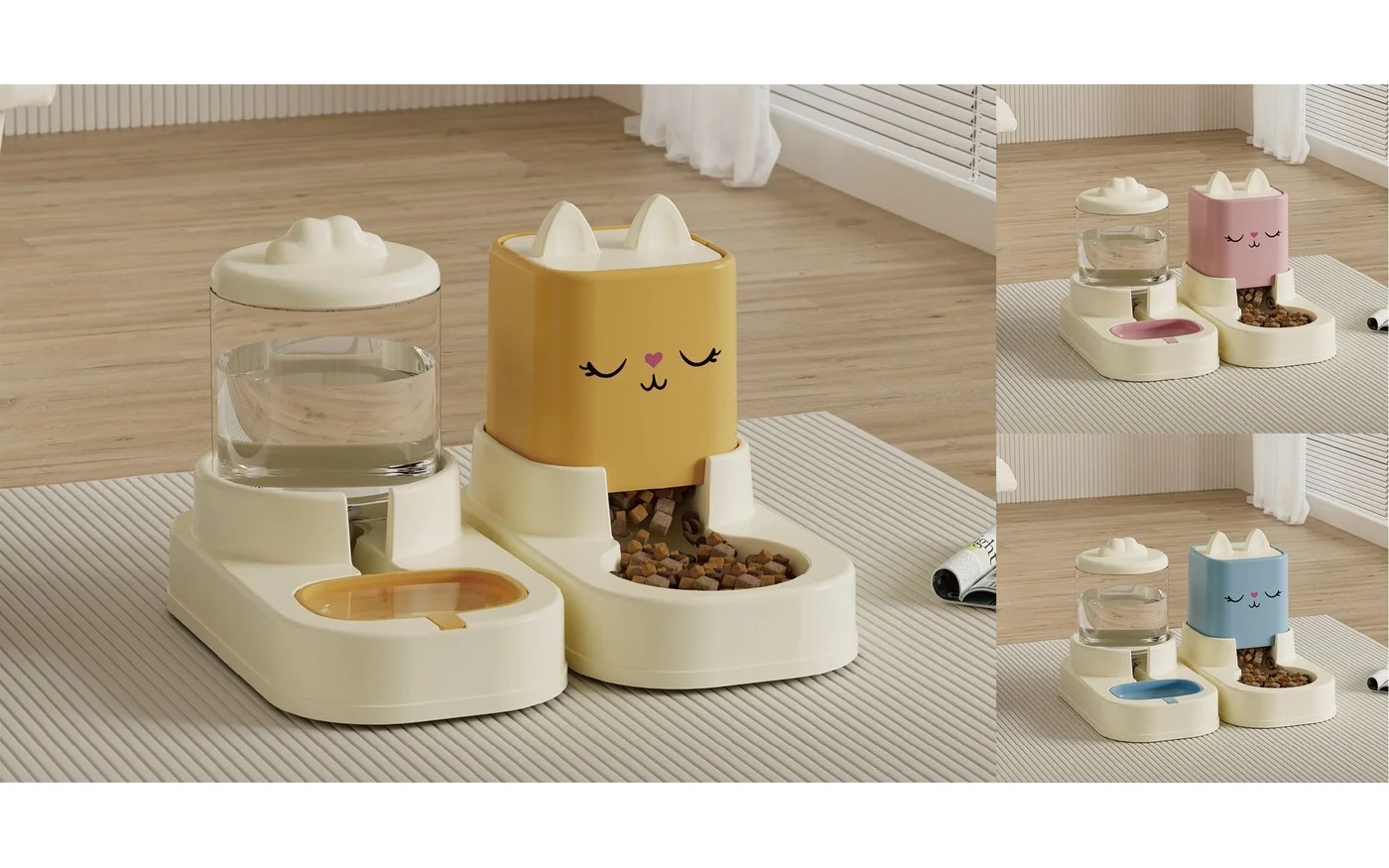
Don't forget the humble alternative. If your real problem is just "my pet eats too fast," an automatic feeder isn't the fix — a slow feeder bowl is. And if you just want a neater, more durable setup without any electronics, a well-made [stainless steel or elevated pet feeder](/products/pet-feeder-32-29-16-5-cm) is simpler, cheaper, and has zero ways to fail. The automatic feeder is only the right answer when the problem is specifically scheduling or portion consistency.
The bottom line
Buy an automatic feeder for the unglamorous reason: consistent portions on a reliable schedule. Choose the simplest model that delivers precise, repeatable portions and is easy to clean, and skip the camera, the app, and the voice recorder — they add failure points, not value. A feeder that works every time, boringly and dependably, is worth ten smart ones that might not feed your pet because the WiFi dropped. Your pet doesn't want an app. It wants dinner, on time, every day.
Referenced in this guide
Keep reading