How often should you clean a litter box?
Scoop daily, wash weekly, replace the litter entirely every two to four weeks. Why those three intervals, and what changes them.
October 23, 2026 · 5 min read · 700 words
The short answer
Three intervals, and they are not negotiable:
- Scoop: once a day. Twice if you have two cats sharing one box.
- Full wash: once a week. Empty it, scrub it, dry it, refill.
- Complete litter change: every two to four weeks, depending on the litter type.
The reason these three exist separately is that they solve three different problems. Scooping removes what smells. Washing removes the film that clings to the walls. Replacing the litter resets the base that has quietly turned to dust.
Why daily scooping matters more than any product
Used litter is not just an odour problem. Cats judge a box by what they smell when they step into it, and a box that reads as "full" is the single most common reason a house-trained cat starts going somewhere else. That behaviour is far easier to prevent than to reverse.
If you have ever come home to a surprise beside the box, check the scooping frequency before you buy anything. Most of the time the fix costs nothing.
Clumping litter makes daily scooping fast — a solid clump lifts out in one piece instead of dragging half the tray with it. Non-clumping litter needs the whole tray emptied more often, which is why it tends to smell worse on the same schedule.
What a weekly wash actually removes
Even with daily scooping, a thin layer of dust and urine residue builds up on the floor and walls of the tray. On plastic it soaks into scratches you cannot see; that is the source of the smell that survives a full litter change.
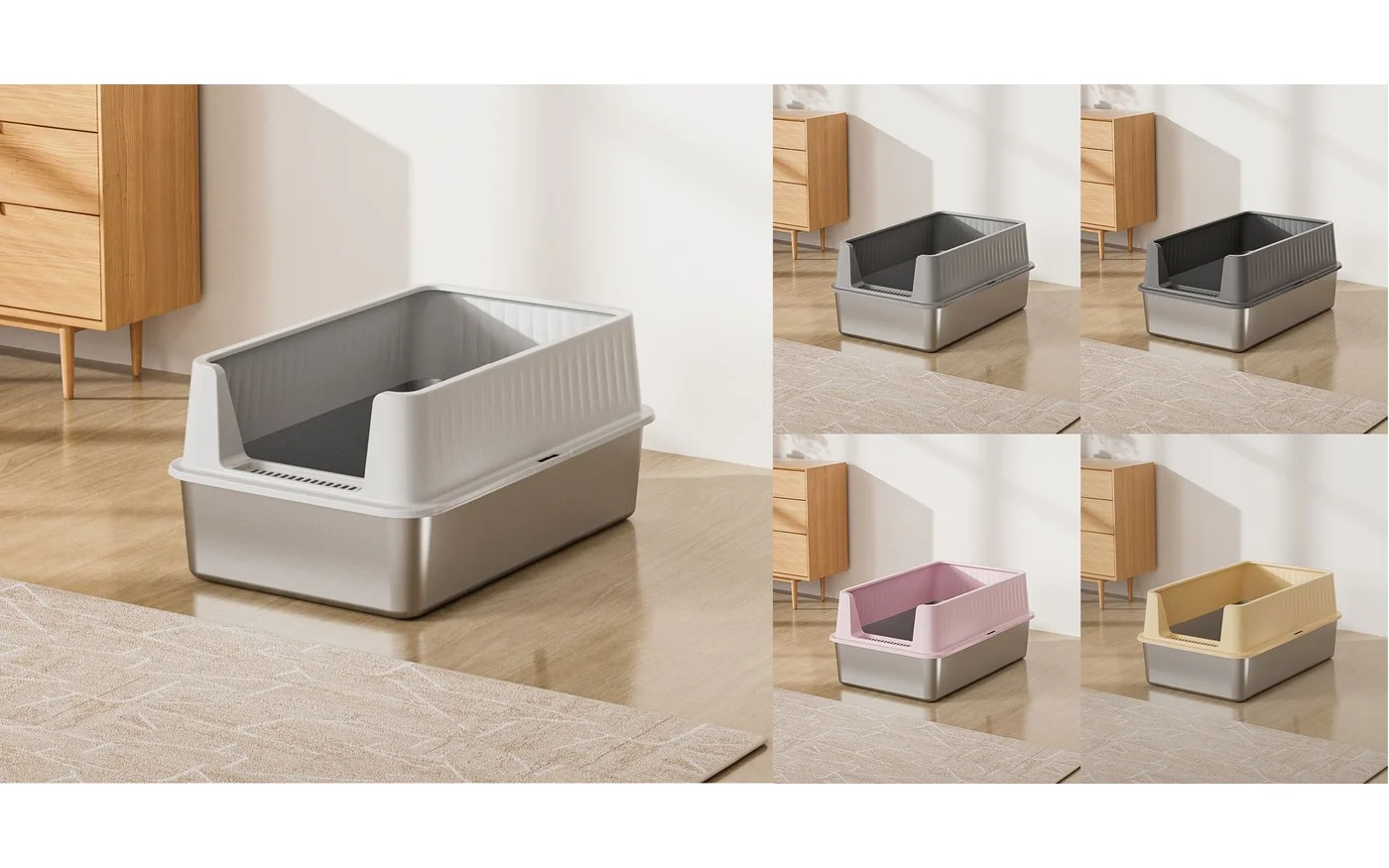
A stainless steel tray has no scratches to hold onto, which is the practical reason it stops smelling after a wash while an older plastic one does not. Scrub with hot water and a mild unscented soap. Skip anything strongly perfumed — a box that smells of detergent to a cat is a box that smells wrong.
Dry it completely before refilling. Damp litter clumps prematurely and turns into a paste at the bottom of the tray.
How often to replace the litter entirely
| Litter type | Full change every | |---|---| | Clumping clay | 2-3 weeks | | Non-clumping clay | 1 week | | Silica crystal | 3-4 weeks | | Pine or paper pellet | 1-2 weeks |
Top up to a depth of 5-7 cm after each weekly wash. Too shallow and urine reaches the floor of the tray; too deep and most cats dig to the bottom anyway and you waste litter.
Things that shorten every interval
- More cats. One box per cat plus one spare, each scooped daily. Two cats sharing a box halves every interval above.
- Kittens and senior cats. Both produce more frequent, smaller deposits, and both are less tolerant of a dirty box.
- Illness or a new diet. More volume, stronger odour. If the schedule suddenly stops keeping up, that is worth a vet conversation rather than more frequent scooping.
- Humid rooms. Moisture accelerates everything. A covered box in a bathroom without a fan will need changing more often than the same box in a dry hallway.
A schedule that actually sticks
The reason people fall behind is not laziness, it is friction. Keep the scoop and a lined bin within arm's reach of the box, not in a cupboard two rooms away. Tie scooping to something you already do daily — feeding time works for most households, because the cat is right there and the box is on the way past.
Set the weekly wash on a fixed day. Sunday evening, Wednesday morning, whichever — a fixed day survives a busy week; "when it looks bad" does not.
Where to start
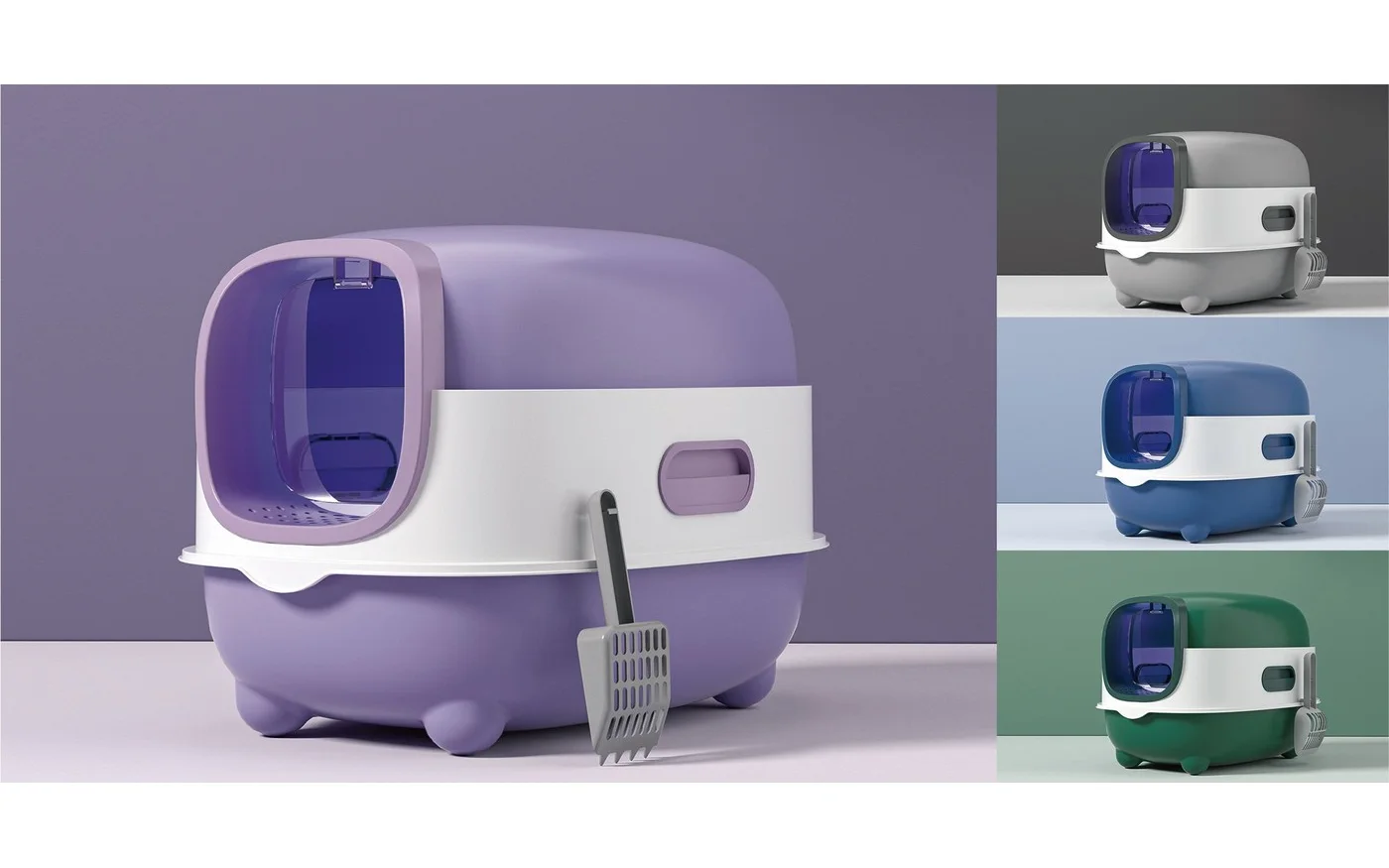
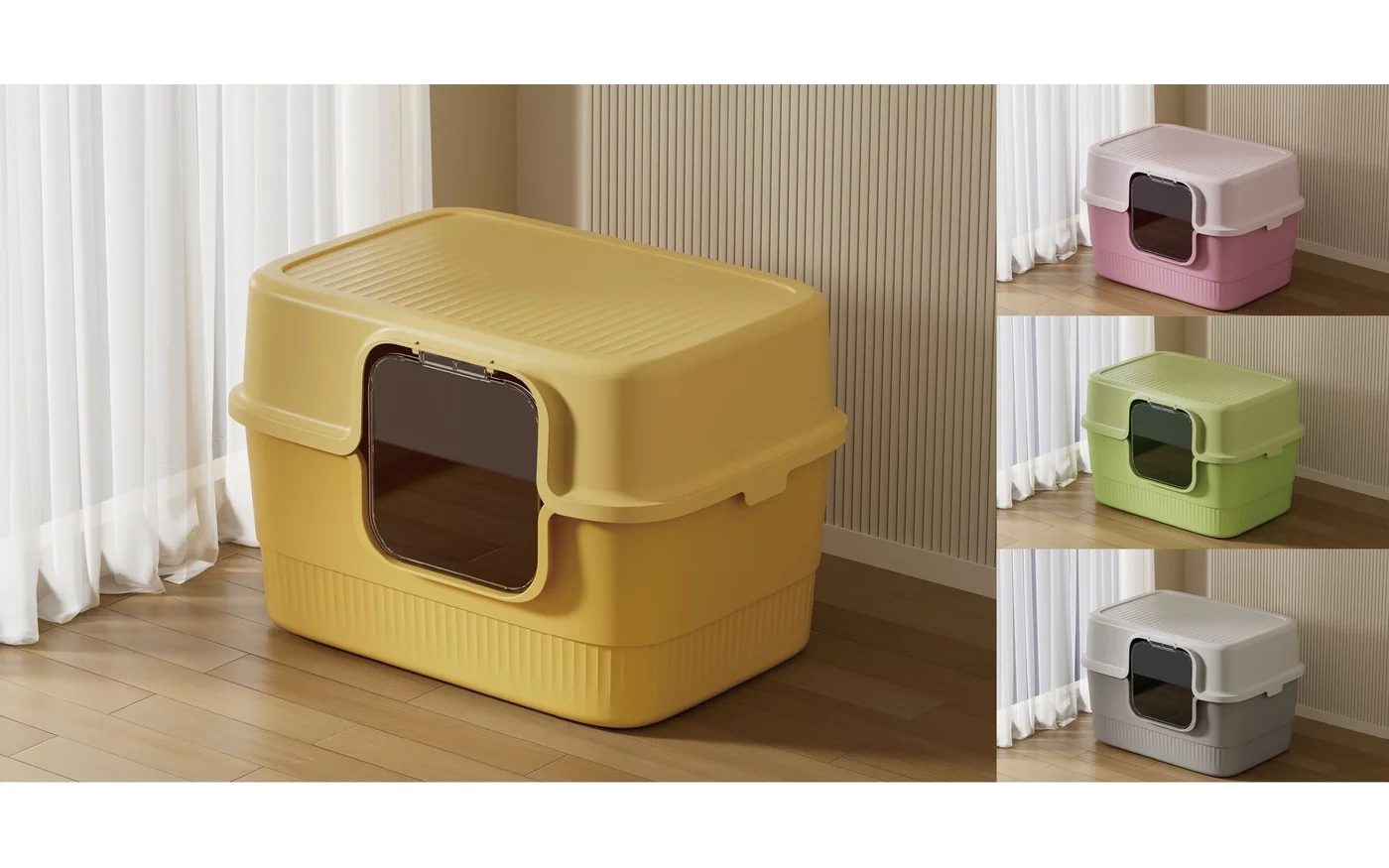
If you are rebuilding the setup from scratch, start with the tray, because it determines how much of this is hard work. A stainless steel open tray washes clean in a minute and does not hold odour in scratches; a high-back semi-enclosed tray contains the litter that cats kick out; a foldable one is the compromise if the box has to live in a small room.
Referenced in this guide
Keep reading