The Boredom Budget: Choosing the Right Enrichment Toys for Your Cat
Your cat isn't bored; it's simply bored with its current reality. This guide helps owners understand the psychology of play and select toys that genuinely stimulate their intellect and body.
October 29, 2026 · 8 min read · 605 words
Boredom is not a mood; it's a physiological state.
If your cat spends hours watching the dust motes dance in a sunbeam, you might assume they are content. But that listlessness, that seemingly perfect, slow-motion grooming session, can be a quiet scream for stimulation. When we treat our cats purely as decorative pets, their complex, instinct-driven minds suffer a subtle form of neglect. Understanding cat enrichment isn't just about buying more expensive toys; it's about meeting biological needs.
Most owners approach cat toys like they approach a piece of furniture: buy the newest, fanciest thing. The problem is, most toys are designed for our convenience, not the cat’s natural hunting and problem-solving cycles.
The Spectrum of Boredom: Why "Play Time" Isn't Enough
When we talk about enrichment, we are talking about mimicking the natural challenges a cat faces in the wild. A stray cat's day is a complex routine: hunt, explore, defend, rest. A bowl of kibble and a clean litter box are merely survival utilities, not a full lifestyle.
The first thing to discard from your "cat-proofing" budget is the concept of "alone time" meaning "no mental stimulation." Cats are incredibly intelligent, and their intelligence requires more than just an occasional pat on the head.
True boredom manifests not only as excessive scratching on forbidden furniture, but sometimes as anxiety-driven destructive behavior, unexplained vocalizations, or even extreme over-grooming. These aren't flaws in your cat; they are sophisticated messages from a bored mind asking for a stimulus that engages its predatory instincts.
Beyond the Feather Wand: Functional Play Types
When shopping, don't just look at the cat—look at the function of the toy. Play should target different instincts: the hunter, the explorer, and the socializer.
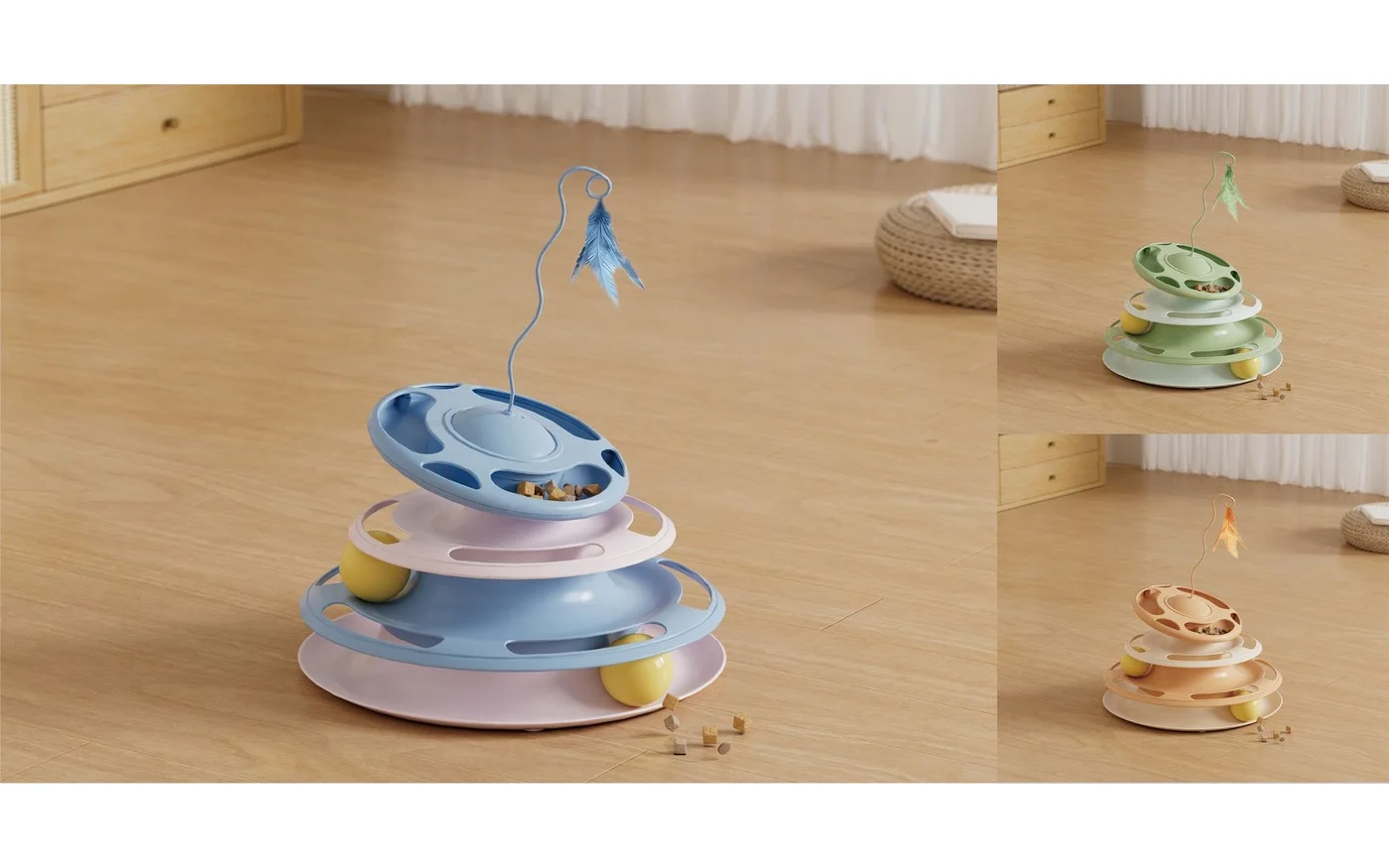
1. The Deep Hunter Challenge (The "Prey" Simulation): This is the most crucial element. Feather wands are fine, but they are too unpredictable. You need toys that require the cat to execute a full, natural kill sequence. This means items that simulate the struggle of catching something—a laser pointer is okay, but a physical, unpredictable toy that can be caught, wrestled with, and defeated is better. Look for collapsible plush toys or modular cat gyms that provide a satisfying, tangible "win."
2. The Environmental Puzzle (The "Puzzle"): The best enrichment is often the environment itself. This is where puzzle feeders and vertical climbing structures shine. Why? Because they force the cat to work for resources. If food is simply handed to them, the brain doesn't fire. If food is presented in a puzzle feeder, the cat must expend calories, focus, and problem-solve—this is mentally exhausting in the best way. A vertical scratch post is more than just scratching; it’s a designated escape route and territorial marking tool, mimicking a jungle climb.
3. The Novelty Injector (The "Surprise"): Our cats adapt quickly. The same toy that was mesmerizing last month will be a boring brick today. This is the most anti-intuitive advice: buy experiences, not items. Rotate toys weekly. Introduce a new texture or scent every few weeks. If all the toys are plastic, introduce a piece of clean pine branch (supervised, of course). The surprise element is often more valuable than the toy itself.
Remember the "Catch": Always end playtime by letting your cat "catch" the toy. The chase is invigorating, but the completion, the satisfying moment of the paw landing on the stationary object, is what provides the crucial psychological closure.
The true measure of pet ownership isn't the size of your bank account, but the depth of your cat's contented purr. It's about building a life that challenges a magnificent, sometimes demanding, little intellect.
Referenced in this guide

Keep reading